
A few years ago, I thought I was good at investment strategies. I had a brokerage account and I was buying individual stocks. At that time, I felt confident that I knew what I was doing. However, I later checked my actual returns. Then I compared them with a simple S&P 500 index fund. I was not even using that fund myself.
This guide covers 15 smart investment strategies that can help you build long-term wealth. Some are strategies I personally use, while others are important methods every investor should know. Whether you are a beginner or already have experience, this guide will help you build a stronger and more effective investment approach.
Why Investment Strategies Matter for Long-Term Financial Success
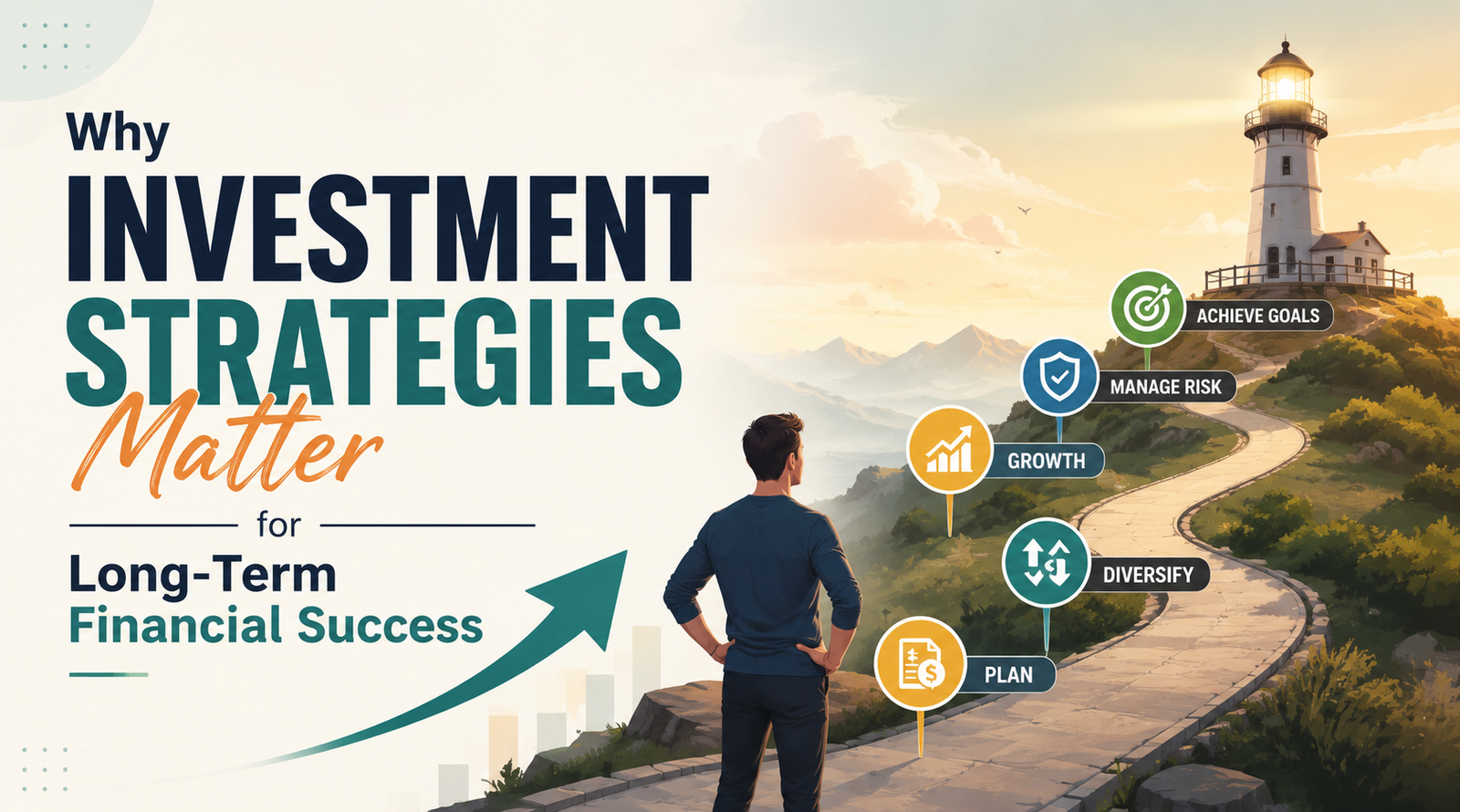
A lot of people invest without any real strategy. They often buy things just because they are popular. Then they simply hope for the best. I was also like that in the beginning. However, the problem is clear. Without a strategy, you react emotionally to the market. You do not follow a plan. As a result, emotional investing usually leads to poor decisions and losses over time.
A strategy gives you a clear framework. It explains what you are buying and why you are buying it. It also shows when you should sell, if needed. Good investment planning starts with choosing strategies that match your goals. It should also fit your timeline and risk level. In addition, markets will go up and down. Therefore, the most important step is to stay consistent and stick to your plan.
Think of it this way: a doctor does not prescribe what is trending. Instead, they follow a treatment plan based on the patient’s condition. In the same way, investment strategies depend on your personal situation. They are not one-size-fits-all. For example, a 28-year-old with a 30-year time horizon can take more risk. However, someone saving for a house in the next three years needs a safer approach.
15 Investment Strategies Worth Knowing in 2026
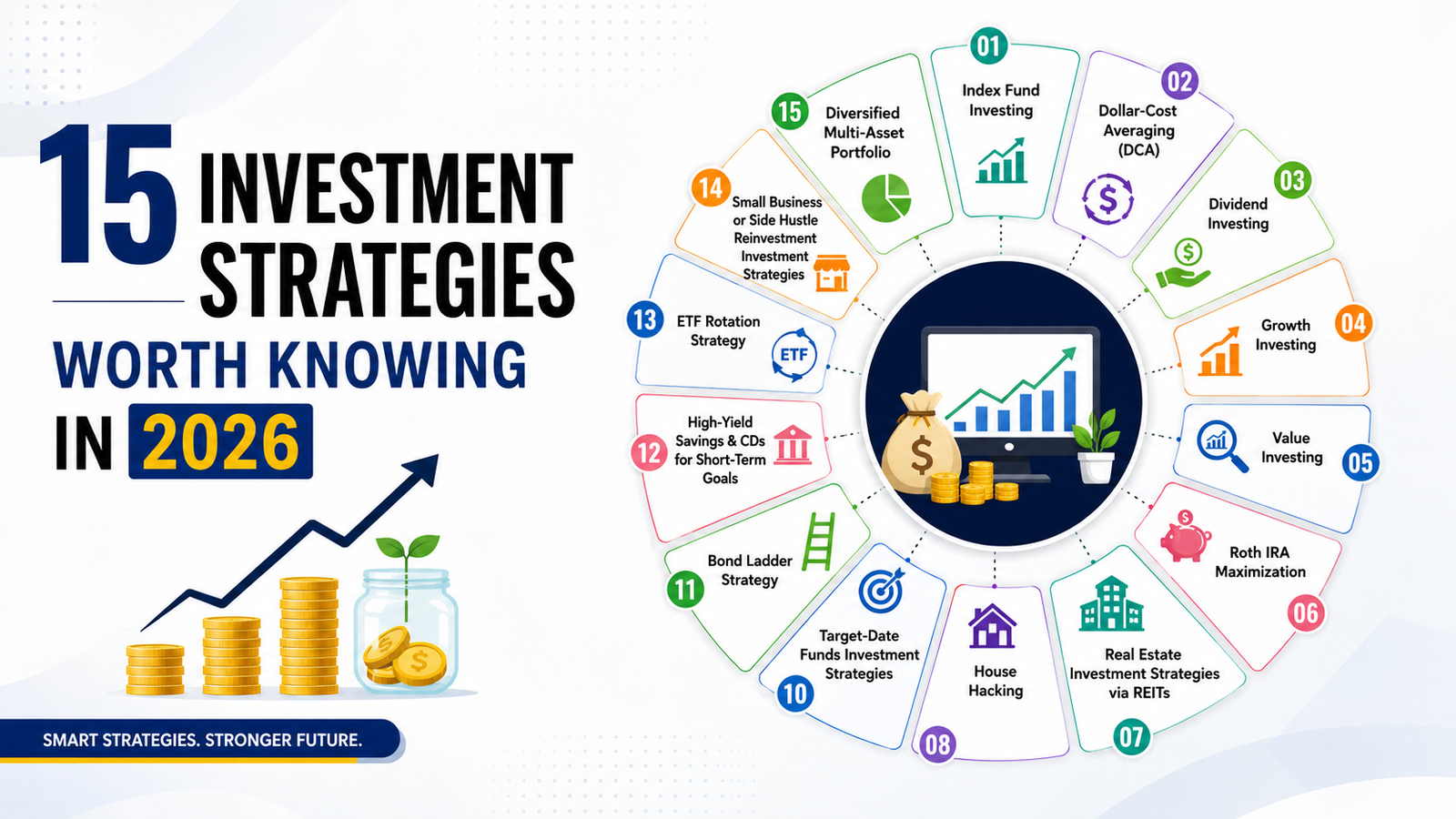
1. Index Fund Investing
This is the foundation of many investing strategies. Index funds track a broad market index like the S&P 500. This means you own a small part of many companies at once.
In addition, they have low fees and built-in diversification. Over the long term, they have also shown strong returns. For example, Fidelity FZROX and Vanguard VTI are popular options. Therefore, many investors prefer to keep most of their money in index funds.
2. Dollar-Cost Averaging (DCA)
3. Dividend Investing
This strategy focuses on companies that pay regular dividends. These are cash payments made to shareholders, usually every quarter. For example, companies like Johnson & Johnson, Coca-Cola, and Realty Income have paid dividends for many years. In fact, some of them have done so for decades.
However, this is not the fastest way to grow wealth. Instead, it provides steady income over time. As a result, dividend income can be reinvested to buy more shares. In addition, it can also support your income during retirement.
4. Growth Investing
This strategy means buying shares in companies that are expected to grow faster than the overall market. For example, this often includes technology and healthcare companies.
However, higher growth also comes with higher risk. In addition, prices can move up and down more sharply. Therefore, this strategy is better for long-term investors. It is best used for money you will not need for 10 years or more. It also suits people who can handle market ups and downs without panic.
5. Value Investing
Popularized by Warren Buffett, value investing means finding companies that are undervalued. These companies trade below their true or intrinsic worth. In addition, the goal is to hold these stocks until the market corrects their price. However, this strategy requires more research and patience compared to others.
As a result, it may take time, but the long-term results can be strong. For US investors, tools like Simply Wall St. and Morningstar can help in screening value stocks.
6. Roth IRA Maximization
This is less of a market strategy and more of a tax strategy. However, it is still one of the most powerful tools available for eligible Americans. A Roth IRA allows your money to grow without taxes. In addition, you do not pay taxes when you withdraw in retirement.
In 2026, the contribution limit is $7,000. If you are 50 or older, the limit is $8,000. Therefore, if you can afford it, you should try to max out your contribution every year.
7. Real Estate Investment Strategies via REITs
You do not need to buy a physical property to invest in real estate. REITs, or Real Estate Investment Trusts, are companies that own income-producing properties. In addition, they are traded on the stock market just like regular shares.
As a result, real estate investment through REITs gives you exposure to property markets. However, you do not need a mortgage or to deal with landlord responsibilities. For example, VNQ (Vanguard Real Estate ETF) is a popular option in the US.
8. House Hacking
If you are ready to buy a property, house hacking is a strategy worth considering. In this approach, you buy a small multi-unit property, such as a duplex or triplex.
Then, you live in one unit and rent out the others. In addition, the rental income helps cover your mortgage. In some cases, it can even pay the full amount. As a result, this strategy helps you build real estate equity faster while also keeping your living costs low.
9. 401(k) Employer Match Optimization
10.Target-Date Funds Investment Strategies
These are all-in-one funds that automatically adjust your asset allocation over time. As you get closer to your target retirement year, the fund becomes more conservative. For example, a fund like Fidelity Freedom 2055 manages this process for you.
In addition, it is a simple and hands-off option for investors who feel overwhelmed by too many choices. As a result, it may not be the most optimized strategy, but it is far better than not investing at all.
11. Bond Ladder Strategy
A bond ladder means buying bonds that mature at different times. For example, you might have one bond maturing each year for five years.
As each bond matures, you take the money and reinvest it again. In addition, this creates a steady and predictable income stream. It also helps reduce interest rate risk. As a result, this strategy is more useful for investors who are closer to retirement. It is also suitable for those who prefer stability over high growth.
12. High-Yield Savings & CDs for Short-Term Goals
Not every dollar should go into the stock market. Money you will need within 1 to 3 years should stay safe. It should also remain easy to access. A high-yield savings account is a good option. Examples include Marcus, Ally, and SoFi.
In addition, Certificates of Deposit (CDs) can also be used for short-term goals. As a result, you still earn interest while keeping your money safe. In 2026, interest rates are strong. Therefore, this is not just “parking cash.” It is a real investment strategy for short-term needs.
13. ETF Rotation Strategy
A more advanced approach, but still worth understanding, is sector rotation using ETFs. In this strategy, investors shift their focus between different sectors based on the economic cycle.
For example, during economic expansion, they may invest more in tech ETFs. However, during a slowdown or contraction, they may move toward utilities or consumer staples ETFs. As a result, this approach can help align investments with market conditions. However, it also requires more active management and stronger market knowledge.
14.Small Business or Side Hustle Reinvestment Investment Strategies
One investing strategy many people overlook is reinvesting in their own business or income streams.
If you run a side hustle or small business, this can be very powerful. Instead of taking all the profits out, you put money back into growth. For example, you can invest in better tools, stronger marketing, or more inventory. As a result, these improvements can often generate higher returns than traditional stock investments.
I’ve seen 200–300% returns reinvesting into my own projects, something no index fund can match short-term. For more on building income streams, check out the ultimate guide to passive income investments.
15. Diversified Multi-Asset Portfolio
The most sustainable long-term approach is diversification across different asset types. This includes US stocks, international stocks, bonds, real estate through REITs, and cash.
In addition, no single investment strategy works well in every market condition. A diversified portfolio may not deliver the highest gains in a single year. However, it helps reduce risk and build steady wealth over many years.
Common Investing Mistakes That Derail Beginners
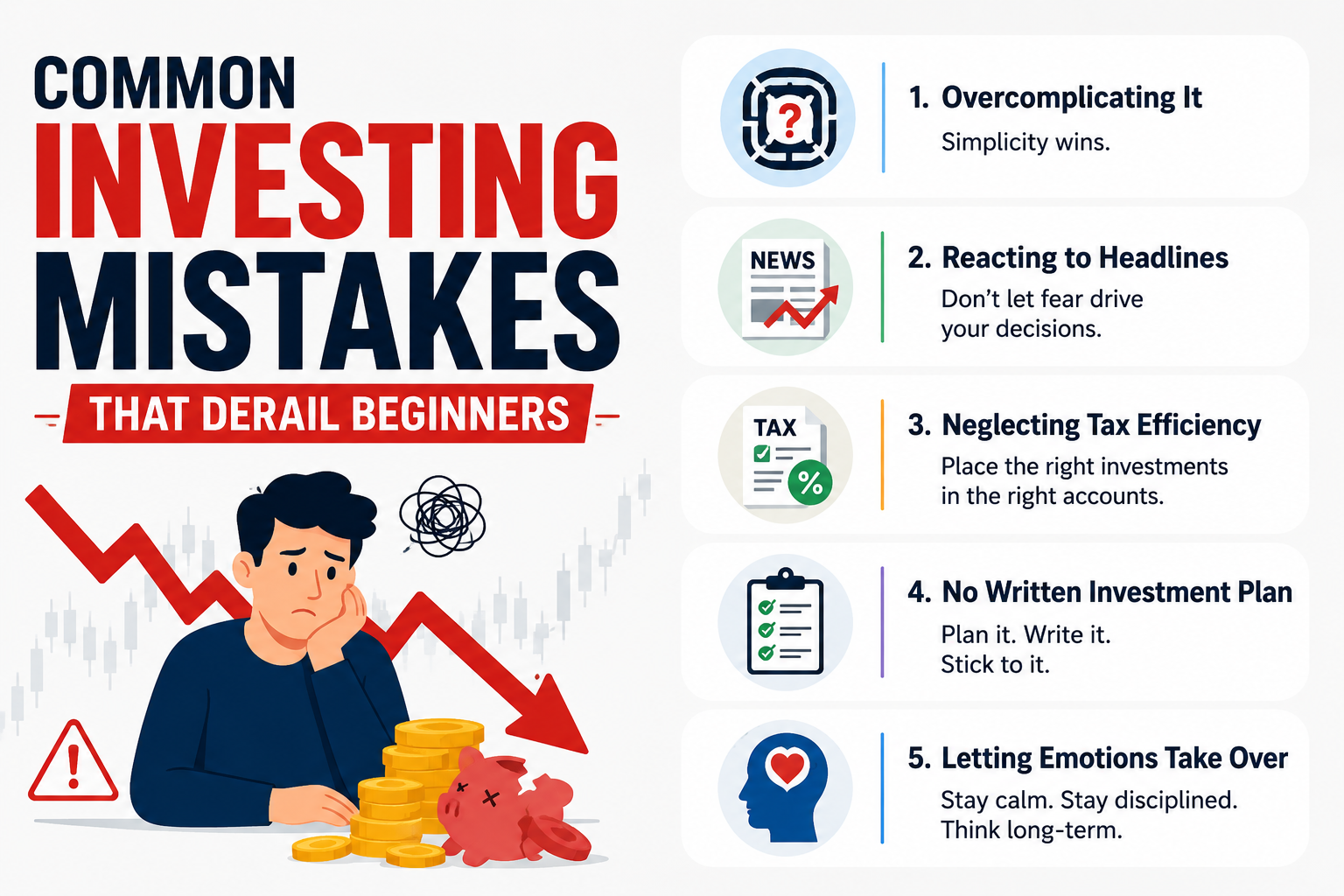
Even with the right strategies, these mistakes can quietly kill your returns.
- Overcomplicating it. I once had 22 different investments across 4 platforms. Half of them overlapped. Simplicity wins , a three-fund portfolio outperforms most complicated setups over time.
- Reacting to headlines. Every year, there is always a new reason why the market is “about to crash.” However, most of these predictions never come true.In addition, if you sold your investments every time someone predicted a downturn, you would miss out on years of market growth. Therefore, it is important to stay focused on your strategy. Stick to your plan and avoid reacting to short-term fear or market noise.
- Neglecting tax efficiency. Putting high-growth assets in a taxable brokerage account and keeping bonds in a Roth IRA is not an efficient approach. In fact, it is usually the opposite of what works best.Therefore, it is important to learn tax-efficient asset location. This means placing each type of investment in the right account. As a result, this strategy can significantly increase your after-tax returns over the long term.
- No written investment plan. means you are relying only on memory and emotions. That can lead to poor decisions over time.
What to Realistically Expect From These Investment Strategies
Let’s be real about timelines. Most investing strategies don’t make you rich in a year. They make you wealthy over 10–30 years through the power of compounding. Here’s an honest snapshot:
- Index fund investing: historically 7–10% average annual returns (before inflation). Slow and boring , until it isn’t.
- Dividend investing: 3–5% annual yield in dividends, plus potential price appreciation. Great for income-focused investors.
- Real estate (REITs or physical): historically 8–12% total returns annually, with tax advantages available through strategies like depreciation for physical property.
- High-yield savings/CDs: 4–5% in 2026 rates, no market risk. Perfect for short-term money.
The biggest factor is not which investment strategy you choose.
Instead, it is whether you stay consistent over time.
A simple or average strategy can still perform very well. This happens when you follow it for 20 years or more. On the other hand, even a brilliant strategy will fail to deliver strong results. This happens if you only stick with it for 1 or 2 years. Therefore, consistency is more important than complexity in investing.
If you’re still figuring out where to begin, this guide to investment planning for beginners is a great companion read , it walks through how to build your first plan from scratch.
Investment Strategies Tools and Resources That Support These Strategies
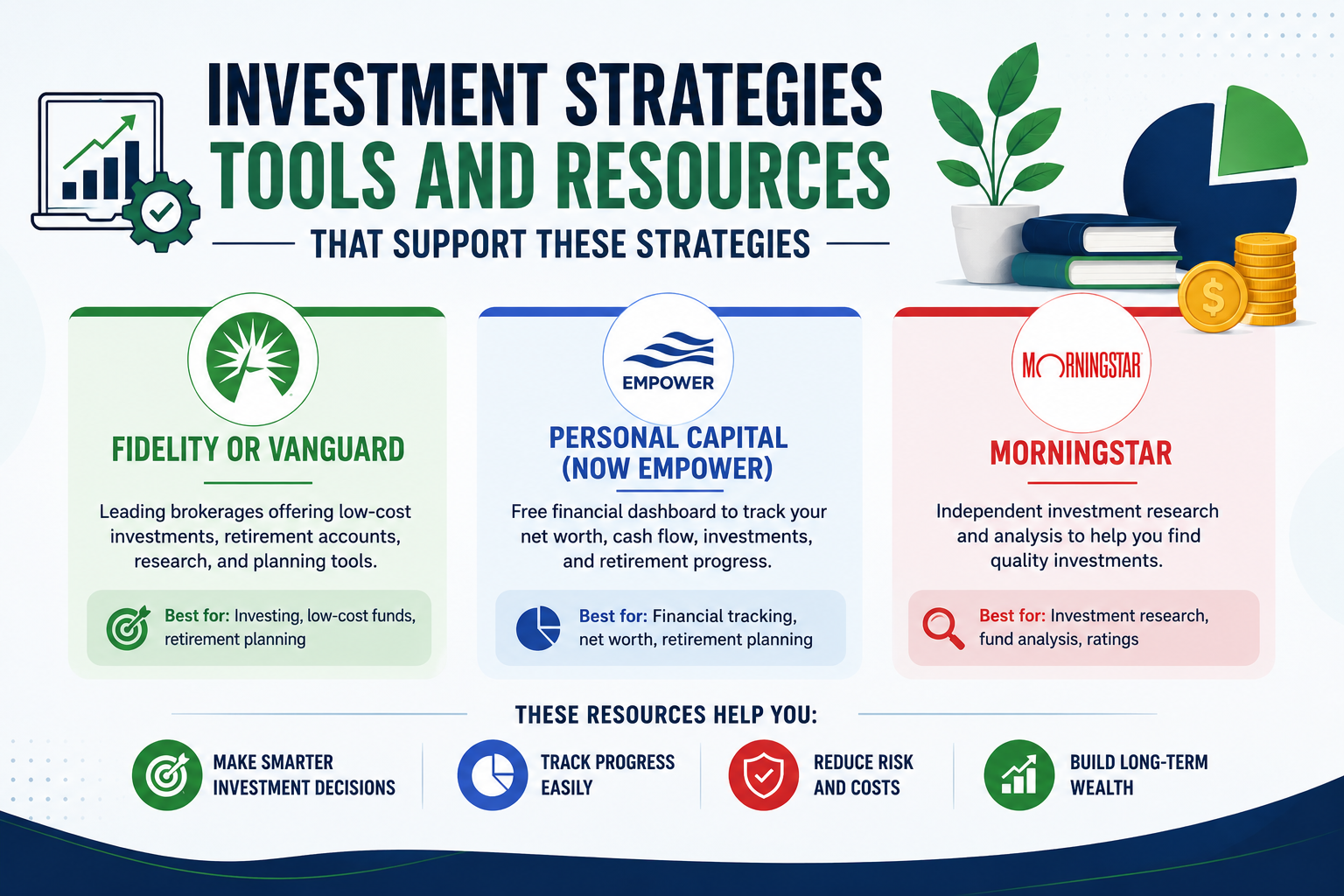
Fidelity or Vanguard
Both platforms offer the essential tools you need, including index funds, ETFs, Roth IRAs, and brokerage accounts.
In addition, they support the core requirements for executing most investment strategies. They also come with low fees and reliable performance. Therefore, they are suitable for beginners and provide strong educational content to help you learn as you invest.
Personal Capital (now Empower)
This is a free tool that brings all your accounts together in one place, including your 401(k), IRA, brokerage, and savings accounts.
As a result, it gives you a clear and complete view of your net worth and overall asset allocation. Therefore, it becomes much easier to track whether your investment strategies are actually working or not.
Morningstar
For researching individual funds, stocks, or REITs, Morningstar is one of the most trusted US platforms. Their free tier covers a lot, and the premium tier is worth it if you’re doing deeper research. Also check out 7 types of investments for beginners for a plain-English breakdown of what each asset class actually looks like in practice.
The Bottom Line on Investment Strategies
There is no single “best” investment strategy. Instead, the right one depends on your goals, timeline, and risk tolerance. Most importantly, it should be a strategy you can stick with consistently.
The 15 strategies covered here include a wide range of options. For example, some are simple and passive, like set-it-and-forget-it index funds. Others are more active, such as value investing and real estate. Therefore, each strategy fits different investor types and situations. The key is to start with what makes sense for you right now. Do not wait until you have everything figured out. Instead, begin with what you understand and improve as you gain experience.
Financial success is not built through one big move. Instead, it is built through consistent and smart decisions over many years. Therefore, it is better to start with just one or two strategies from this list. Implement them properly and stay consistent. As your financial situation improves, you can revisit and adjust your approach. In addition, always focus on learning and improving over time. For more practical money guidance and insights, nativesmoney.com can be a helpful resource.
Frequently Asked Questions
What are the best investment strategies for beginners in 2026?
For most beginners, the best approach is index fund investing combined with dollar-cost averaging inside a Roth IRA or 401(k).
These methods are low-cost and have been proven over many decades. In addition, they do not require constant monitoring or active management. Therefore, it is best to start simple in the beginning. Later on, you can gradually add more complexity once you gain experience and understand how the market works better.
What Is the Difference Between Investment Planning and Investment Strategies?
Investment planning is the overall process of setting financial goals and creating a roadmap to achieve them. On the other hand, investment strategies are the specific methods used within that plan. For example, these can include dividend investing, real estate, or index funds.
To make it simple, think of the plan as the destination. Meanwhile, investment strategies are the vehicles that help you reach that destination.
Are real estate investment strategies a good idea for beginners?
REITs are a strong entry point for beginners who are interested in real estate investment strategies. They are easy to access and highly liquid. In addition, they do not require a large down payment or landlord responsibilities.
On the other hand, physical real estate offers more control over the investment. However, it also requires more capital and a deeper level of expertise. As a result, it can be more complex for beginners. Meanwhile, house hacking is a practical middle ground. It allows investors to buy a first property and generate rental income. Therefore, it is often a smart step for those ready to enter real estate investing.
How many investment strategies should I use at once?
For most beginners, 2 to 3 strategies are enough. For example, index fund DCA can be used as a core approach. In addition, a Roth IRA can help with tax efficiency. A high-yield savings account is also useful for short-term goals.
Moreover, overcomplicating your approach in the beginning often leads to confusion. As a result, it can create worse outcomes instead of better returns.
Can investment strategies lead to real financial success?
Yes, financial success through investing is usually a long-term journey. Most successful investors do not rely on secret methods or quick profits.
Instead, they choose solid investment approaches and stay consistent over time. Even during market ups and downs, they continue investing with discipline. As a result, compounding helps their money grow steadily over the years. In the end, patience is one of the most powerful investment strategies for building long-term wealth.