
The first growth stock I ever bought, I chose because someone on Reddit said it was going to “10x.” I didn’t look at a single financial metric. I didn’t understand the business. I just bought it because it felt exciting. Three months later, I’d lost 38% of what I put in. That was my expensive education in growth stocks , and it’s what eventually pushed me to actually learn how to evaluate them properly.
In this guide, I’m going to break down how to identify strong long-term investment opportunities versus overhyped companies, and how to approach investing as part of a responsible long-term financial plan. Whether you’re just figuring out how to start investing or you already have a portfolio and want to improve your strategy, this guide is for you.
What Are Growth Stocks? (And Why Do People Chase Them)
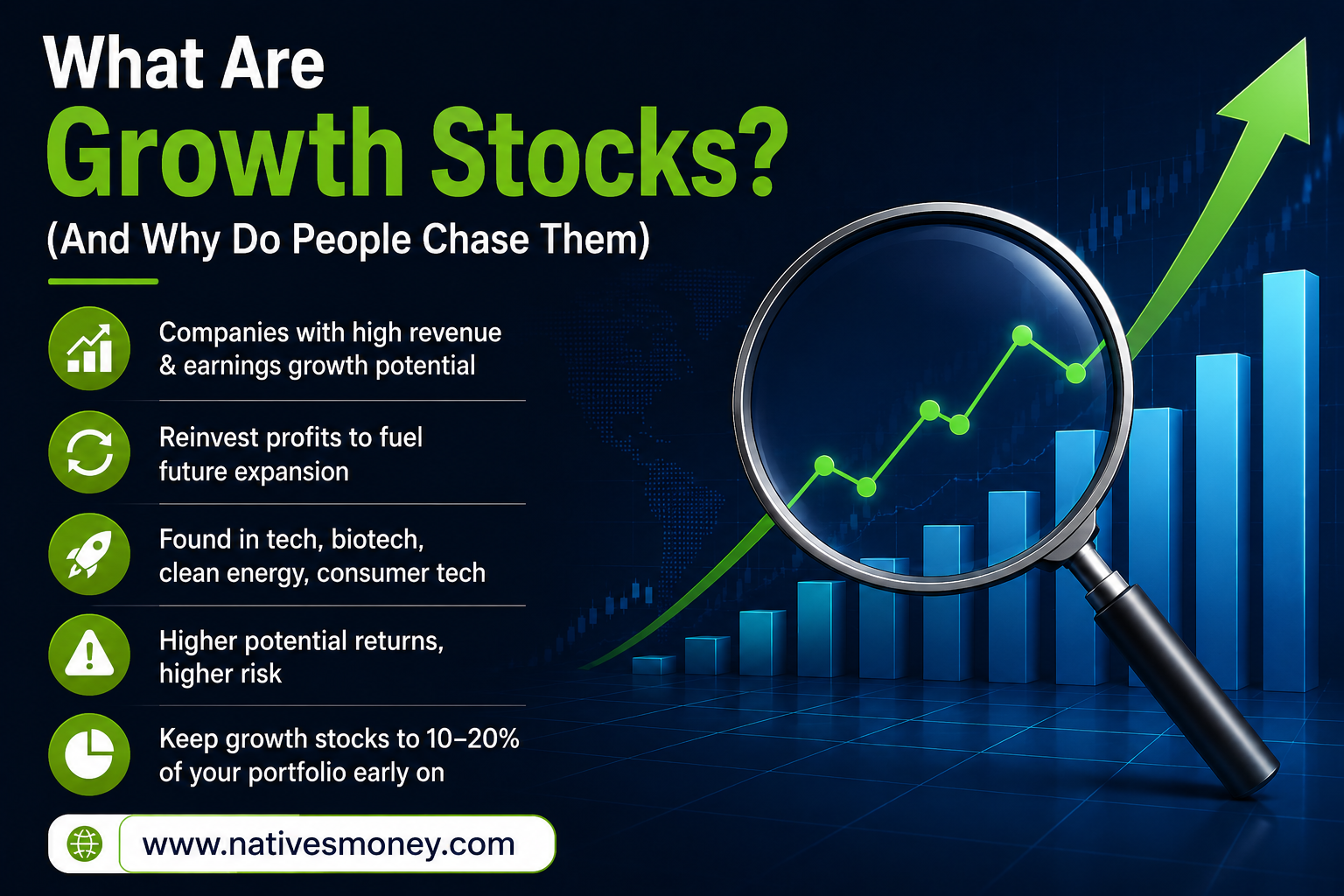
A growth stock is a share in a company that’s expected to grow its revenue and earnings significantly faster than the average market. These companies typically reinvest their profits back into expansion rather than paying dividends. Growth stocks are most commonly found in sectors like technology, biotech, clean energy, and consumer tech.
Think of it like planting a fruit tree versus buying a mature orchard. A mature orchard (think dividend stocks or index funds) gives you steady, predictable output right now. A young fruit tree takes years of investment before it bears fruit , but if it grows into a massive orchard, the payoff is enormous. That’s the growth stock tradeoff.
The reason people obsess over certain investments is the possibility of outsized returns. But investment planning requires understanding that many high-potential companies often trade at elevated valuations because investors are paying for future potential, not current earnings. When that expected performance doesn’t materialize, prices can drop hard and fast.
If you’re just learning how to start investing, growth stocks probably shouldn’t make up more than 10–20% of your portfolio early on. But understanding them is still valuable , and knowing how to spot a genuinely strong growth company is a skill that pays off for life. For a broader foundation first, check out this guide on how to start investing in 2026.
1. Look for Consistent Revenue Growth
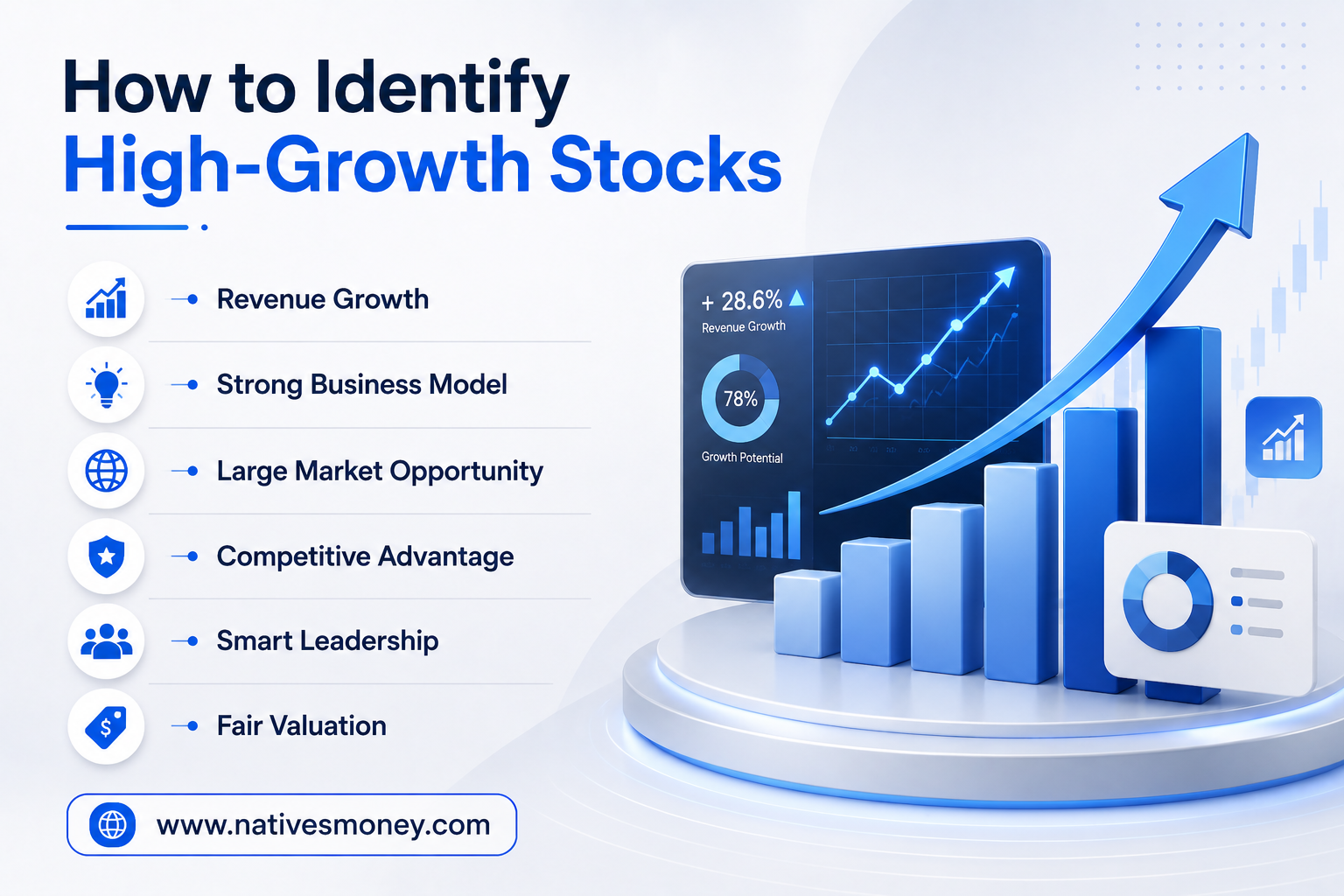
The most important metric I check first is revenue growth , not just one quarter, but over the last 3–5 years. I want to see consistent 15–25%+ annual revenue growth. A company that grew 80% one year but has been flat since is a red flag, not a success story. Check these numbers on SEC filings or on Macrotrends, a free US-based research tool.
2. Understand the Business Model
I never invest in a company I can’t explain in two sentences. What does it sell? Who pays for it? How does it scale? Growth companies with subscription or recurring revenue models (think SaaS companies like Salesforce or Shopify) are often more sustainable than one-time-purchase businesses because revenue compounds as the customer base grows.
3. Evaluate the Total Addressable Market (TAM)
A company can only grow so far if the market it serves is small. High-growth companies typically operate in large and expanding markets. When I research a potential investment, I want to see that the market they’re attacking is worth billions , and that they’re still a small slice of it, meaning there’s room to run.
4. Check the Competitive Moat
Warren Buffett’s concept of the “economic moat” applies to growth stocks too. What stops a competitor from copying this company tomorrow? Moats can be technology patents, network effects (like social platforms), brand loyalty, switching costs, or proprietary data. Companies without moats tend to see their growth eaten by competition.
5. Assess the Management Team
This one’s underrated. The best growth companies are almost always led by founders or executives with a track record of execution. I read earnings call transcripts, watch CEO interviews, and look for evidence of clear strategic thinking , not just promotional language. A strong management team navigates bad markets; a weak one blames them.
6. Watch the Valuation and Don’t Overpay for Growth Stocks
Many beginners get burned when they ask what is the best stock to invest in right now. They buy good companies at very high prices. Even a strong growth company with a 200x price-to-earnings ratio has very little room for mistakes. That is why I also look at the Price-to-Sales (P/S) ratio and PEG ratio (Price/Earnings to Growth). These help me see if the price is realistic based on future growth, not just hype.
Growth Stock Mistakes I’ve Made and Seen Others Make
I’ve made almost every mistake on this list personally. Sharing them here so you don’t have to pay the same tuition I did.
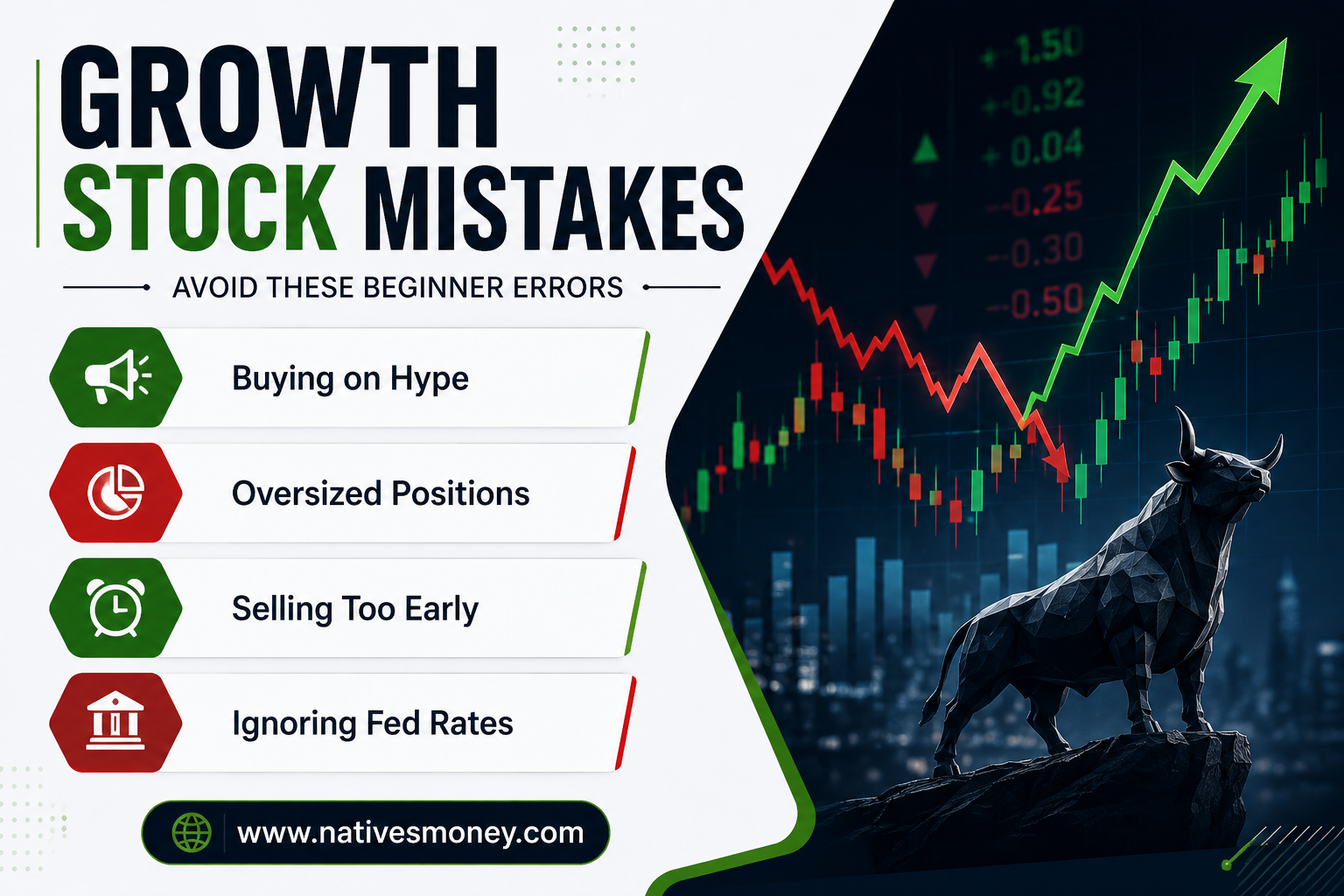
- Buying on hype alone. Social media and financial influencers pump stocks constantly. By the time something is trending on Reddit or Twitter/X, the smart money is usually already in , and often positioning to get out. I learned this lesson painfully more than once.
- Not sizing positions appropriately. Putting 30% of your portfolio in a single growth stock is speculation, not investing. I now cap individual growth stock positions at 5% of my total portfolio. The upside is still meaningful, but a 50% crash doesn’t destroy my financial plan.
- Selling too early out of fear. Early investors in companies like Netflix and Tesla who panic-sold during dips missed the biggest gains. Volatility is the price of admission for growth stocks. If you believe in the business fundamentals, short-term drops are noise. The hard part is knowing the difference between a dip and a deteriorating business.
- Ignoring the macro environment. Stocks are especially sensitive to interest rate changes. When rates rise, future earnings are discounted more heavily, which can crush high-valuation companies. I now pay attention to Fed policy , not to time the market, but to understand why my value stocks positions are moving the way they are.
What to Realistically Expect From Growth Stock Investing
I want to be honest here because there’s a lot of rosy content about growth stocks online. The reality is more nuanced.
- Growth stocks can deliver 20–30%+ annual returns in bull markets , but they can also drop 50–70% in corrections. This happened to many high-growth tech stocks in 2022.
- The average holding period for successful growth investors is measured in years, not months. Most of the big gains come from staying patient through the volatile early years.
- Not every growth stock becomes the next Amazon. In fact, most don’t. Diversifying across 8–15 growth companies (rather than betting everything on one) significantly improves your odds of catching a winner.
- In the US, short-term capital gains (positions held under 1 year) are taxed as ordinary income , which can be 22–37% depending on your bracket. Hold stocks for over a year to qualify for the lower long-term capital gains rate of 15–20%.
For a broader look at how value stocks fit into an overall wealth-building approach, I’d recommend reading this piece on 15 investment strategies to build long-term wealth in 2026 , it shows exactly where growth investing fits relative to other strategies.
Best Tools for Researching Growth Stocks in the US
Morningstar
A trusted research platform in the US. It provides analyst reports, fair value estimates, and moat ratings to help judge whether a growth stock is worth its price. The free version offers useful information, and the premium plan is affordable for serious investors.
Macrotrends
A free tool I use all the time. It shows past financial data directly from SEC filings, like revenue growth, profit margins, and P/E ratios, in simple charts. It is very useful for checking if a company’s growth is real or just hype.
Seeking Alpha
A good platform for reading analysis from independent writers and checking earnings estimates. The paid version also gives access to simple data scores and Wall Street forecasts. I use these to compare and confirm my own research.
Also worth bookmarking: the ultimate guide to passive income investments if you want to see how growth stocks can complement more passive income streams in a balanced portfolio.
Final Thoughts
Growth stocks can be part of a strong long-term investing strategy, but only if you use discipline, real research, and realistic expectations. People who build wealth from these stocks are not the ones who got lucky on a Reddit tip. They are the ones who studied the business, managed risk properly, and stayed invested during ups and downs. They stayed confident because they understood the fundamentals.
Start small, stay curious, and never invest more in a single growth stock than you can afford to lose completely. If you want more practical guidance on building wealth the right way, not hype-driven advice, Native Money has useful resources to help you keep learning and growing.
Frequently Asked Questions
What are growth stocks and how do they work?
Growth stocks are shares of companies expected to grow their revenue and earnings faster than the overall market. They usually have higher prices because investors expect strong future growth.
Unlike dividend stocks, growth companies use their profits to expand the business instead of paying cash to shareholders.
What is the best stock to invest in right now for growth?
There is no single answer to what the best stock to invest in right now is. It depends on your time, risk level, and research. Instead of chasing tips, focus on companies that grow steadily, make strong profits, and have a clear advantage over others. Also look for businesses with a big market to grow in.
Before investing, always do your own research. You can use tools like Morningstar or Macrotrends to understand companies better.
How do growth stocks fit into investment planning?
Growth stocks can be a good part of an investment plan, especially for young investors. They have the potential to give higher returns over time. However, their prices can go up and down very quickly.
Because of this, many financial experts suggest keeping growth stocks between 10% and 25% of your portfolio. The rest of your money can be invested in safer options like index funds and bonds. This balance helps lower risk and keeps your portfolio more stable over the long term.
How do I start investing in value stocks as a beginner?
Start by learning how to invest wisely. First, open a Roth IRA or brokerage account with platforms like Fidelity or Schwab. Then, build a strong base with low-cost index funds.
After that, invest a small portion of your portfolio (5–15%) in carefully researched value stocks. Also, spread your money across different companies and sectors. This helps reduce risk and supports long-term portfolio growth and stability.
Are growth stocks risky for long-term investors?
They carry more risk than broad index funds, especially when interest rates rise. However, for long-term investors with a 10+ year plan, that risk can become easier to handle over time.
The key is to choose companies with strong business fundamentals, not just popular trends or short-term hype. Also, investors should stay patient during market drops instead of reacting emotionally or selling in panic.