
I used to think the Stock_Market was for people in suits on Wall Street , not for a regular person with a few hundred dollars and zero finance background. That belief cost me years of compounding. When I finally sat down and learned how the stock market actually works, I realized it was far more accessible than I’d ever been told. The barrier isn’t money or expertise. It’s information , and once you have that, everything changes.
The problem most beginners face isn’t motivation. It’s that every piece of stock market content assumes you already know what a ticker symbol is, what the S&P 500 means, or why index funds beat most active traders over time. You get dropped into a conversation that started without you.
This guide starts from zero. I’ll walk you through how the Stock_Market works, the key terms you need to know, how to start investing practically in 2026, and what realistic results actually look like for everyday Americans.
What the Stock_Market Is and How It Actually Works
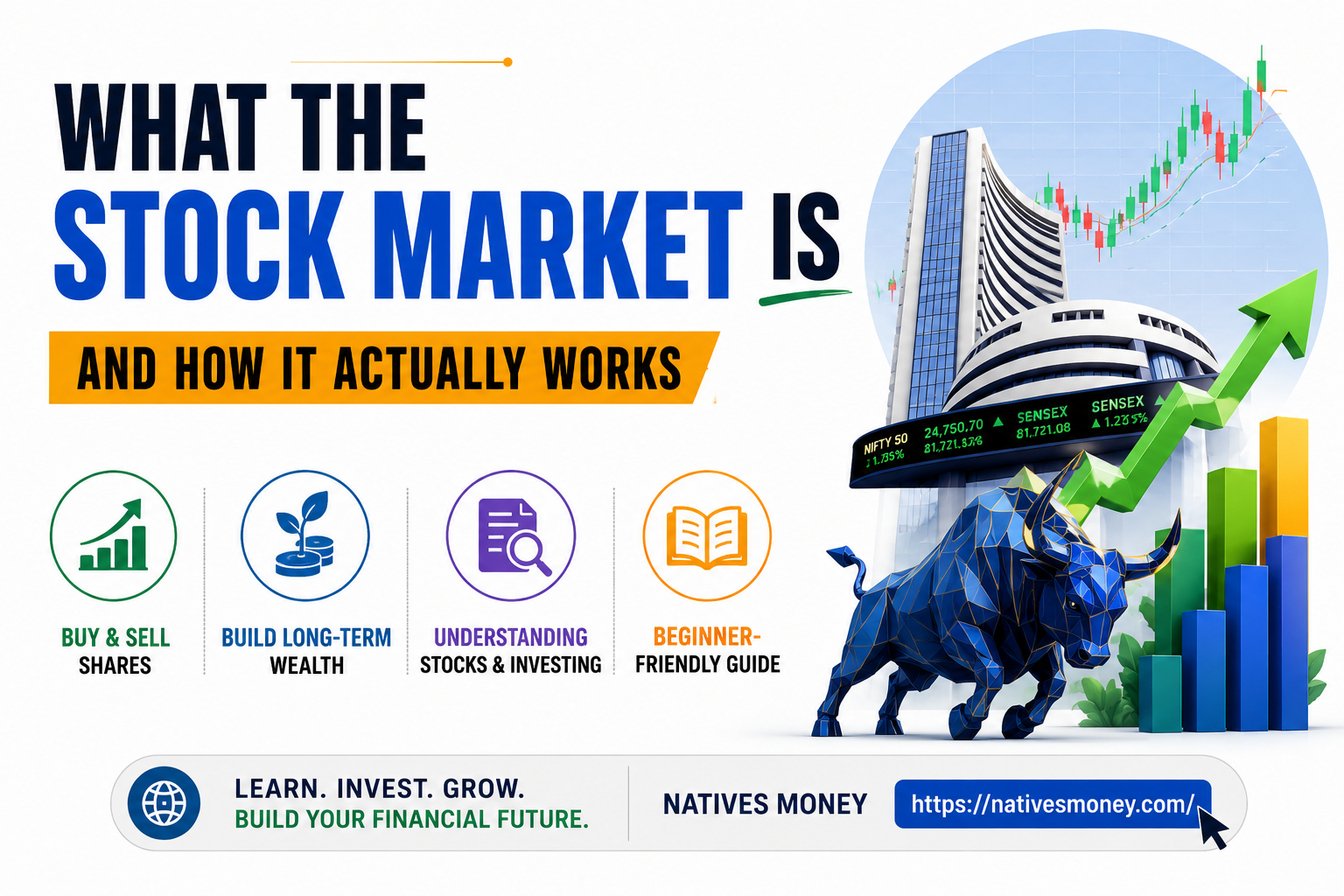
The stock market is a marketplace where buyers and sellers trade ownership shares of publicly listed companies. When a company goes public through an IPO, it sells shares to raise money. Those shares then trade between investors on exchanges like the New York Stock Exchange (NYSE) and NASDAQ. Every time you buy a share, you own a tiny piece of that company.
Understanding basic stock market terminology makes all the difference. A share is a single unit of ownership. A ticker is the short symbol for a stock (AAPL = Apple, TSLA = Tesla). The S&P 500 is an index tracking the 500 largest US companies. A bull market means prices are rising. A bear market means prices are falling. Terms like these appear constantly in financial news and apps, and knowing them removes the intimidation factor completely.
One of the most practical things to understand is timing. The US stock market opens at 9:30 AM Eastern Time and closes at 4:00 PM Eastern Time, Monday through Friday, excluding federal holidays. This matters less if you invest through index funds, but it’s essential knowledge for anyone watching prices or placing trades.
How to Start Investing in the Stock_Market in 2026
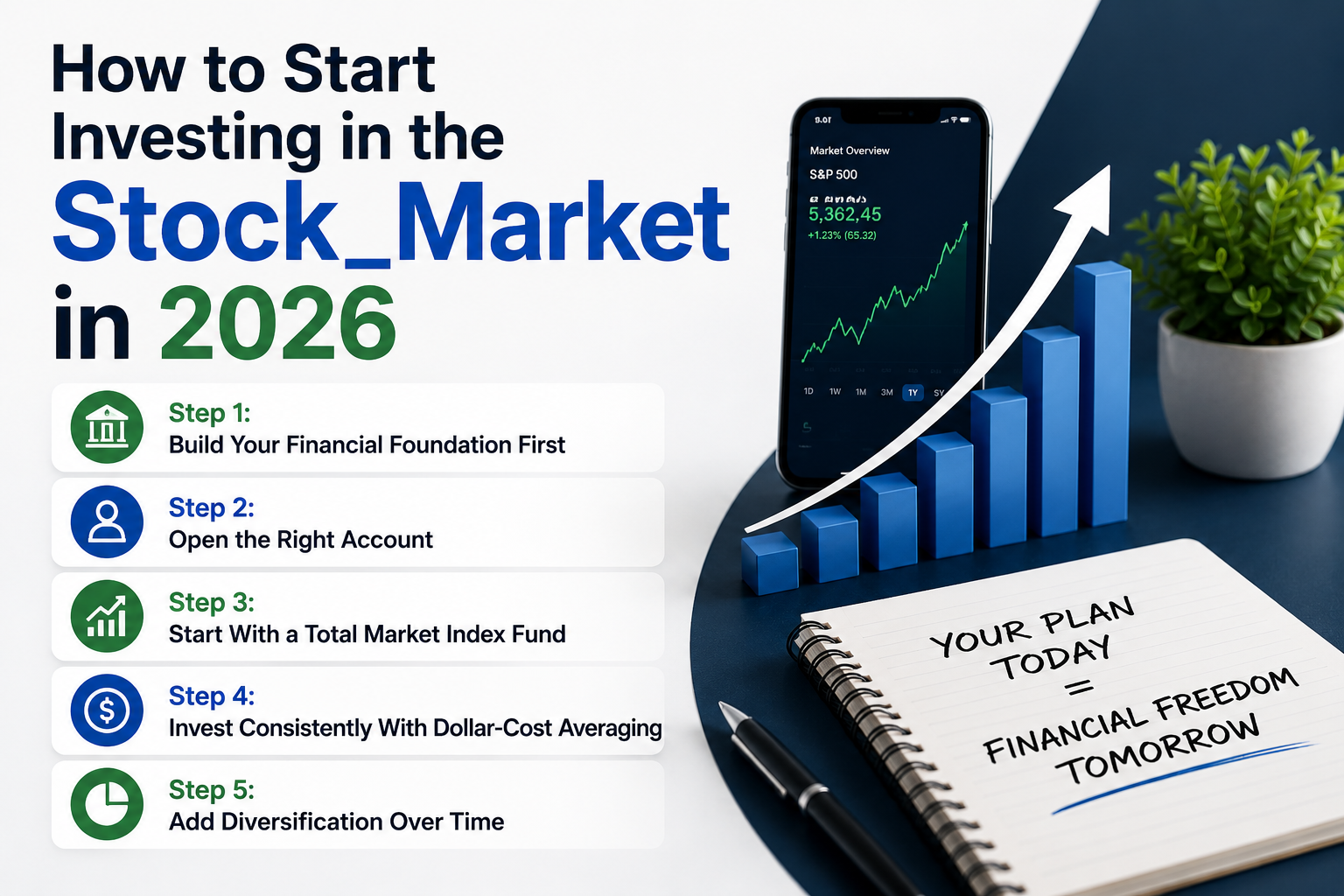
Here is the practical, step-by-step path I’d follow to start investing today. Each step builds on the last.
Step 1: Build Your Financial Foundation First
Before you put a dollar into the Stock_Market , cover two things first: pay off any credit card debt above 18% APR (the stock market averages 10% annually , paying off 22% APR debt first is a better guaranteed return), and build a 3-month emergency fund in a high-yield savings account. Once those are in place, investing makes complete sense.
Step 2: Open the Right Account
Open a Roth IRA at Fidelity or Vanguard for your primary stock market investing. Contributions are after-tax, but all growth and qualified withdrawals are completely tax-free. The 2026 limit is $7,000/year. No account minimums at Fidelity , you can open one today with $1 and start investing immediately.
If your employer offers a 401k with matching contributions, enroll and contribute at least enough to capture the full match first. That is a 50-100% guaranteed return before you even touch the Stock_Market with your other savings.
Step 3: Start With a Total Market Index Fund
For most beginners, the best first stock market investment is a total market index fund. The Fidelity ZERO Total Market Index Fund (FZROX) is a great example of a completion total stock market index fund, it holds thousands of US companies in one fund at zero expense ratio. This approach means you own a slice of the entire US economy without picking individual winners or losers.
Vanguard’s VTSAX and its ETF version VTI serve the same purpose, complete US stock market exposure in a single, low-cost fund. You do not need to research individual stocks to build real wealth. A total stock market index fund does the work for you through diversification and time.
Step 4: Invest Consistently With Dollar-Cost Averaging
Set up automatic monthly contributions to your stock market account, even $100 or $200/month. Dollar-cost averaging means you buy more shares when prices are low and fewer when prices are high. Over time, this smooths out your average cost per share. Most people checking daily news sources every day make worse investment decisions than people who automate contributions and check quarterly.
Constant stock market today CNN monitoring creates anxiety and leads to emotional trading. Set your contribution, automate it, and check your portfolio quarterly at most. The market will go up and down daily , that noise is irrelevant to a long-term investor.
Step 5: Add Diversification Over Time
Once you have a total US market fund running, add international exposure with FZILX (Fidelity) or VXUS (Vanguard). Then add a bond index fund for stability as your portfolio grows. This three-fund structure , US stocks, international stocks, bonds , covers the global investment universe at minimal cost and requires rebalancing just once a year.
Stock_Market Mistakes Beginners Make Most Often
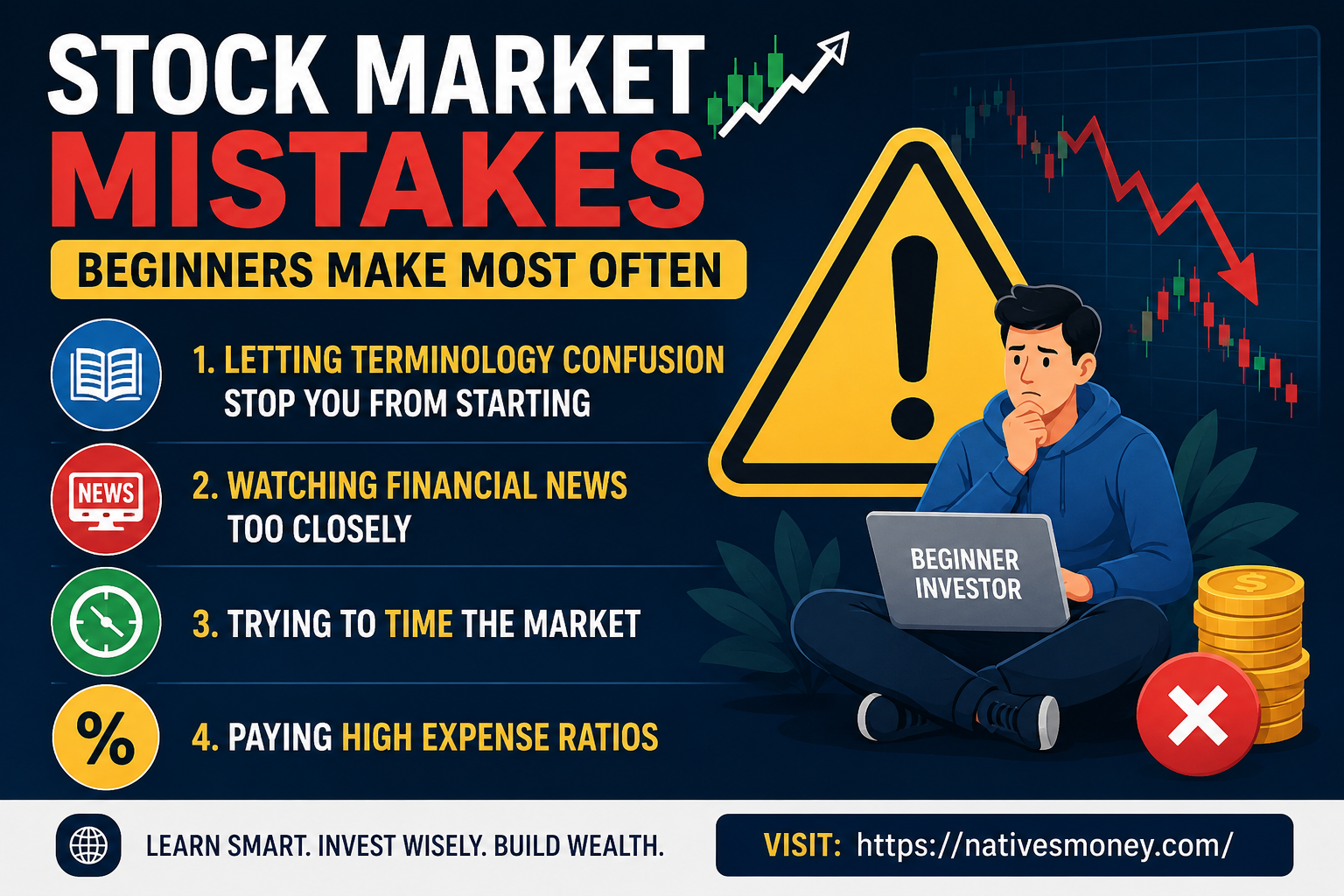
I made several of these. Here is what actually hurts new investors most.
- Letting stock market terminology confusion stop you from starting. You do not need to master all stock market terminology before you invest your first dollar. Learn the basics , shares, index funds, expense ratios, diversification , and start. You will learn the rest through experience far faster than through studying alone.
- Watching the stock market today CNN too closely. Daily financial news is designed to generate engagement, not investment wisdom. Every dramatic drop leads to dramatic recovery headlines the following week. Long-term investors who ignore stock market today CNN coverage and stay invested through volatility consistently outperform those who react to news cycles.
- Trying to time the market. Waiting for the Stock_Market to drop before investing is a losing strategy. Research from Vanguard shows that investing immediately , even at a market high , outperforms waiting for a dip in the majority of historical scenarios. Time in the market beats timing the market.
- Paying high expense ratios. A 1% annual fee on a $100,000 portfolio costs you roughly $280,000 in lost compounding over 30 years compared to a 0.03% index fund. Always check the expense ratio before you buy any fund in the Stock Market . Lower is always better for long-term returns.
What to Realistically Expect from Stock_Market Investing
The US stock market has averaged about 10% per year before inflation over the last century, and around 7% after inflation. In any single year, returns can vary a lot. It may go up 25% or fall 30%. But over long periods like 10 years, it has never given a negative return in US history. This long-term stability is why consistent investing in diversified index funds can build real wealth over time.
This is what consistent investing can lead to. A 27-year-old who invests $300 every month in a total stock market index fund, with an average 8% yearly return, could have about $440,000 by age 57. Out of this, $108,000 comes from their own money. The remaining $332,000 is from compounding growth. This is not a guaranteed result, but it shows how long-term investing in the US stock market has worked historically.
Tax-wise, money in a Roth IRA grows and is withdrawn completely tax-free. In a regular brokerage account, long-term gains (if you hold for more than one year) are taxed at 0%, 15%, or 20%, depending on your income. These rates are usually lower than normal income tax. It is better to use tax-advantaged accounts first so you can keep more of your returns after tax.
Best Tools and Resources for Stock_Market Beginners in 2026
These are the platforms and resources I would use to start investing today:
- Fidelity (free, zero minimums) , Open a Roth IRA and invest in FZROX, a zero-fee total stock market index fund that includes thousands of US companies. There are no commissions and no minimum account balance. It is one of the simplest beginner-friendly ways to invest in the US stock market.
- Vanguard (free) , It is a pioneer of index fund investing. VTI and VTSAX give you broad exposure to the US stock market at very low fees. It also has an investor-owned structure, which means the money collected in fees goes back to the fund investors.
- Stockanalysis.com (free) , It is used to research individual stocks or check fund holdings. It shows things like revenue growth, profit margins, and valuation ratios. You can use it without a subscription. It becomes useful when you move beyond index funds and start studying individual stocks in detail.
The US stock market opens at 9:30 AM ET. If you use limit orders, you can place them before the market opens or after it closes with Fidelity’s extended-hours trading. But most people who invest for the long term do not need to check the market every day. Automatic monthly investing makes things simple and removes the need to worry about the right time to invest.
Once you understand the basics, your next step is choosing between growth and value investing approaches. For that comparison, growth vs value stocks: key differences, benefits, and which investment strategy wins in 2026 gives you a clear framework.
The Bottom Line
The stock_market is one of the easiest ways for everyday Americans to build wealth. You do not need expert knowledge, a lot of money, or the ability to predict the future. You just need a Roth IRA, a total market index fund, regular monthly investing, and patience during market ups and downs. These simple habits have helped ordinary people in America build more wealth than almost any other method.