
For about two years, I had no idea there were different types of stocks beyond “good ones” and “bad ones.” I just bought names I recognized and hoped for the best. Then I lost a chunk of money in a market correction and had to actually sit down and figure out what I was doing wrong , especially when it came to understanding growth vs value stocks.
That’s when I stumbled into the growth vs value stocks debate, and it completely changed how I think about investing. These aren’t just random categories; they reflect two very different investing philosophies that shape how markets work and how investors actually make money.
If you’ve ever Googled “what is the best stock to invest in right now” and felt overwhelmed by conflicting advice, this article will help you clear up that confusion. I walk you through what both approaches mean, how to figure out which one fits your situation, and what I’ve personally learned from using both.
Growth vs Value Stocks Explained Simply
Let me break this down the way I wish someone had explained it to me early on.
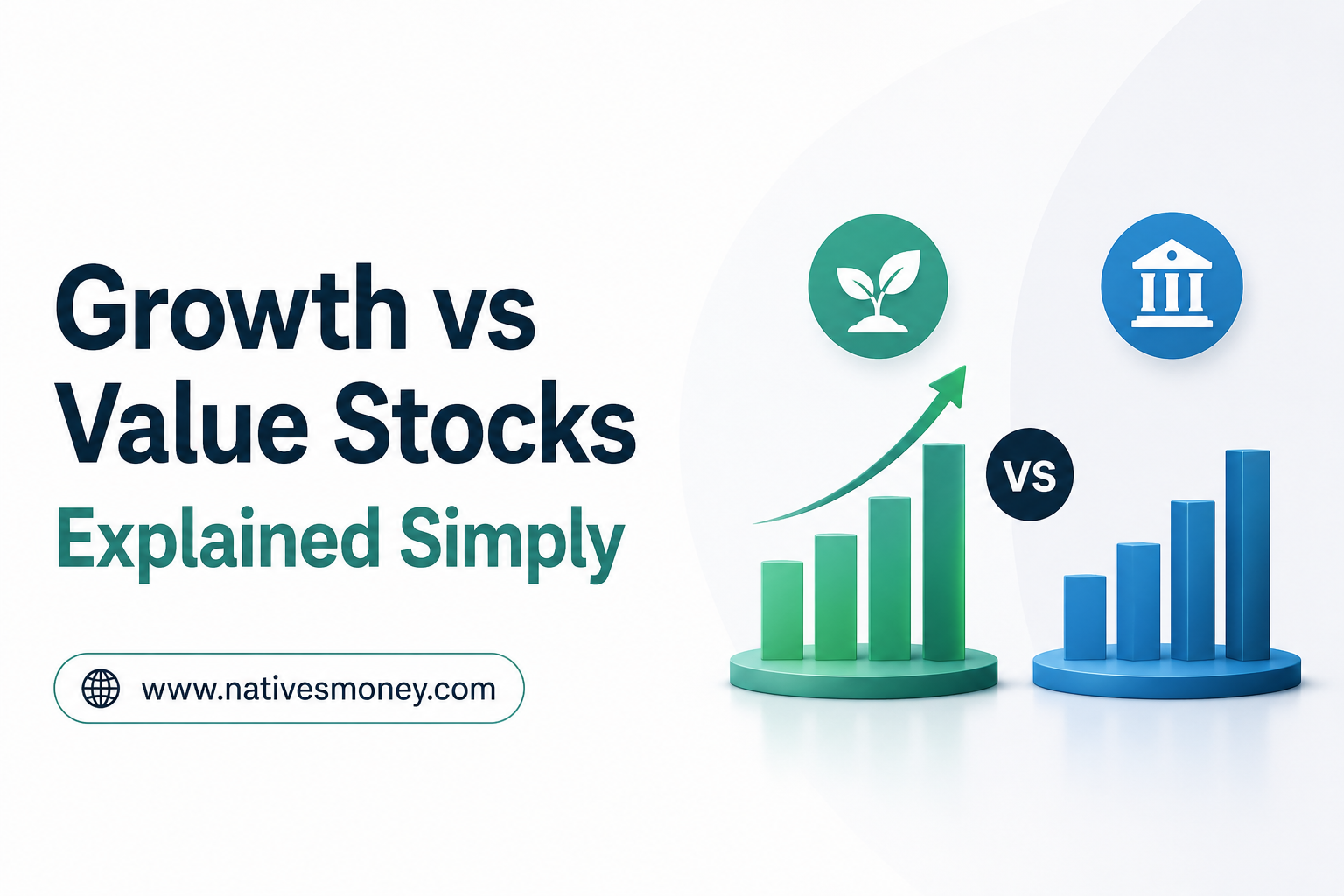
Growth stocks are companies expected to grow faster than the overall market. Think high-flying tech companies, AI platforms, biotech firms. They often reinvest all their profits back into expansion , so they rarely pay dividends. You’re betting on where the company will be in 5–10 years, not where it is today. The price usually reflects that optimism, meaning you pay a premium for the potential.
Value stocks are the opposite. These are well-known companies in sectors like banking, energy, healthcare, or consumer goods. Their stock prices are lower than what experts think they are really worth. This can happen when a sector becomes unpopular, a company misses short-term earnings, or the whole market goes down and pulls prices with it.
The opportunity is in that gap between price and true worth.
Here’s the analogy I always use: investing strategies are like choosing between backing a trendy startup coffee shop with a cult following and investing in a well-run diner that has been profitable for decades but is often overlooked. One approach focuses on future potential and rapid expansion, while the other emphasizes stability, proven performance, and long-term value.
Both can make you money. The difference is in how and when.
How to Decide Which Investing Strategy Is Right for You: Growth vs Value Stocks
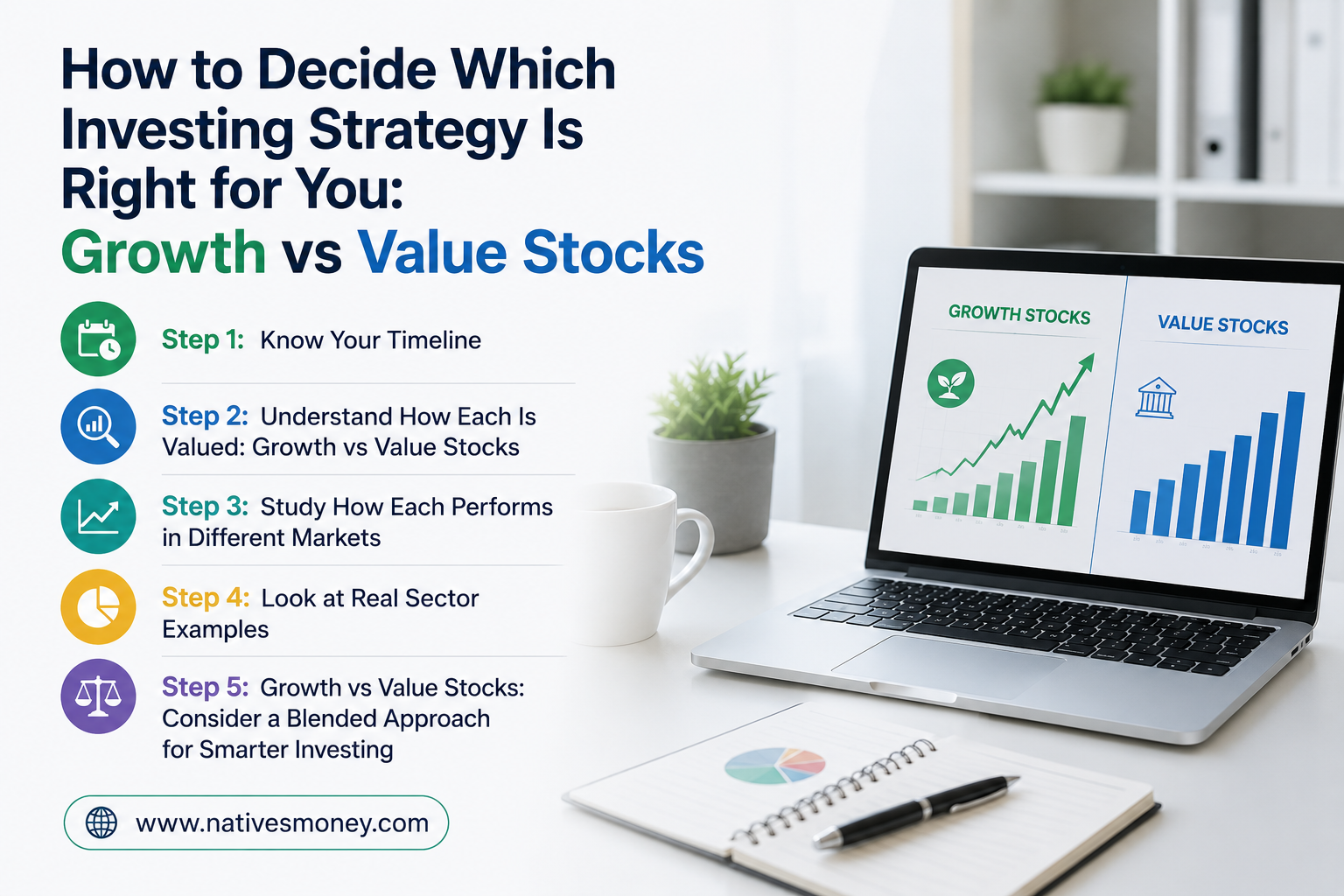
Step 1: Know Your Timeline
This is the first question I ask before any investment decision. If you need the money in 2–3 years, growth stocks are probably too volatile. Their prices can swing 30–50% in either direction in the short term. Value stocks, with their dividends and lower valuations, tend to be more stable , though not immune to downturns.
If you’re investing for 10–20 years and won’t panic when your portfolio drops 25%, growth stocks have historically delivered higher total returns over that kind of stretch. Time is what turns volatility into opportunity.
Step 2: Understand How Each Is Valued: Growth vs Value Stocks
For growth stocks, the key metrics are revenue growth rate, earnings growth projections, and total addressable market. The Price-to-Earnings (P/E) ratio is often sky-high or even negative , because investors are pricing in future profits that don’t exist yet. That’s not automatically crazy; it’s a bet on trajectory.
For value stocks, you’re looking at lower P/E ratios (ideally below the sector average), Price-to-Book (P/B) ratios under 1.5, and dividend yield as a sign of real cash generation. Tools like Finviz, Morningstar, and the screeners inside Fidelity or Charles Schwab make this easy to filter.
Step 3: Study How Each Performs in Different Markets
One of the most useful things I learned: growth stocks tend to outperform in bull markets, when investors are optimistic and willing to pay premiums for future potential. Value stocks tend to outperform during corrections and bear markets, when investors rotate toward more stable, cash-generating businesses.
This is why most experienced investors don’t pick one and ignore the other , they hold both, in proportions that match their risk tolerance and where we are in the economic cycle.
Step 4: Look at Real Sector Examples
Right now, some of the most talked-about growth stocks are in artificial intelligence, cloud computing, and clean energy. Companies in these spaces often trade at high multiples because the market believes their earnings will explode in the next decade.
On the value side, certain financial stocks, energy companies, and healthcare names are trading below historical averages despite solid fundamentals. These are the kinds of places value-focused investing strategies find opportunity.
Step 5: Growth vs Value Stocks: Consider a Blended Approach for Smarter Investing
After experimenting with both, here’s where I’ve landed personally: I keep about 60% of my equity allocation in broad index funds (which naturally include both growth and value), 25% tilted toward growth-oriented ETFs like QQQ, and 15% in individual value picks I’ve researched. This isn’t a prescription , it’s just what matches my timeline and comfort level.
The point is: you don’t have to pick a side. A thoughtful blend is a legitimate investing strategy that most financial advisors actually recommend.
Growth vs Value Stocks: Mistakes I Made Picking Sides Too Hard
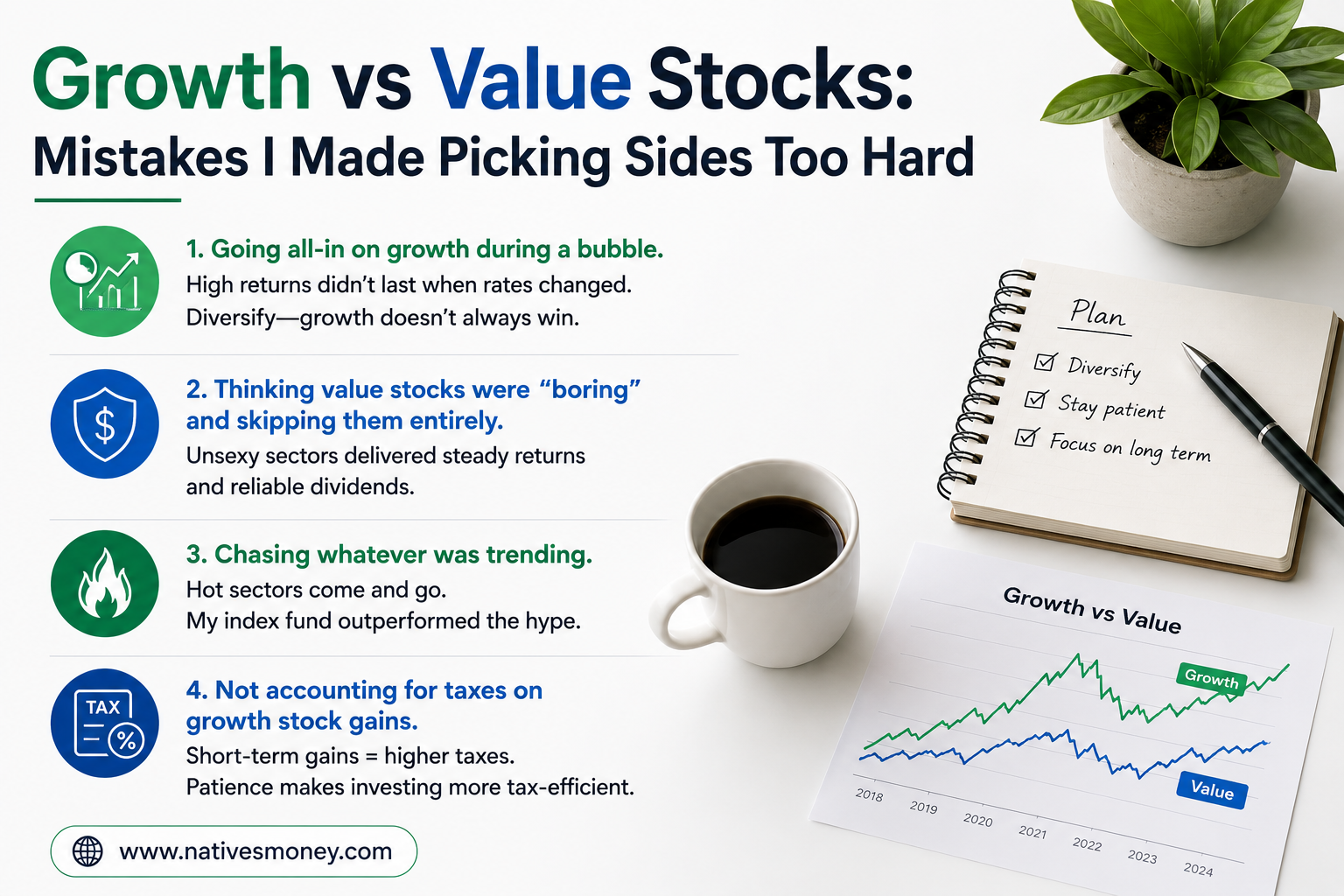
Going all-in on growth during a bubble. In 2021, I was heavy in high-growth tech names because the returns looked incredible. When the rate environment shifted in 2022, growth stocks got absolutely hammered. I didn’t diversify because I was convinced growth always won. It doesn’t , not in every environment.
Thinking value stocks were “boring” and skipping them entirely. Some of my best-performing investments over the past few years came from sectors I once ignored, like utilities, financials, and consumer staples. The returns were not flashy, but they stayed steady, and I kept receiving dividends even when prices went down.
Chasing whatever was trending. There’s always a hot sector. Crypto, meme stocks, AI plays at peak hype , I chased them all at one point. None of those decisions beat my boring index fund over the same period.
Not accounting for taxes on growth stock gains. Growth stocks, when they pop, tempt you to sell fast. I’ve sold positions held less than 12 months and paid ordinary income tax rates on those gains. Value stocks held for dividends and long-term appreciation are usually more tax-efficient if you’re patient.
Growth vs Value Stocks: What to Realistically Expect from Each Approach
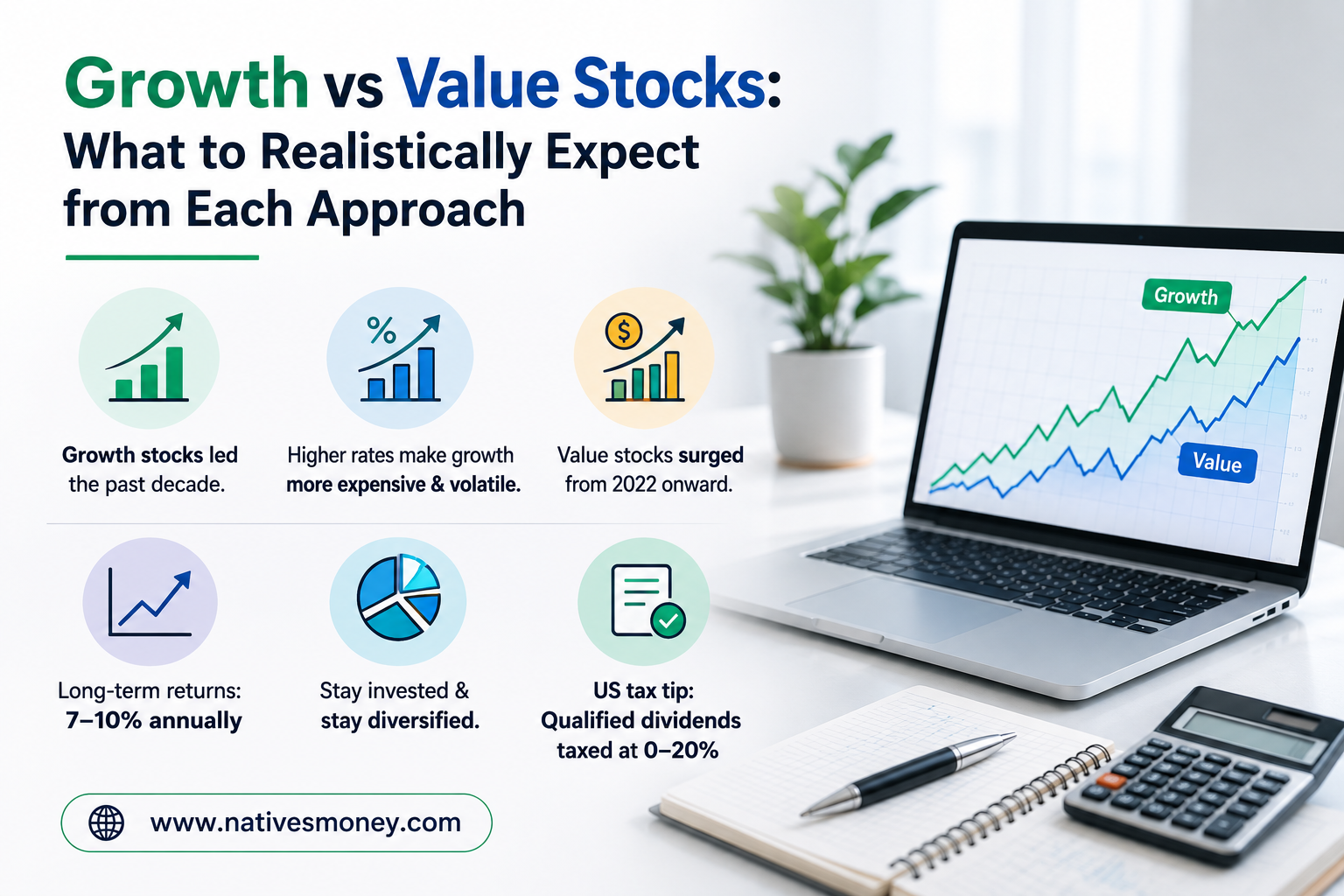
Historically, growth stocks have outperformed value over the past decade , largely driven by ultra-low interest rates that made future earnings more valuable. But that environment has changed. Higher rates make growth stocks more expensive to hold and more vulnerable to repricing.
Value stocks had a notable resurgence from 2022 onward, and many analysts believe the next decade may favor value more than the last one did.
Realistic long-term expectations for either strategy, in a diversified form, hover around 7–10% average annual returns , similar to the broad market. Neither approach reliably “beats” the market every year. What matters is staying invested, staying diversified, and not overreacting to short-term swings.
US tax note: dividends are typically qualified dividends taxed at 0–20% depending on your income, which is more favorable than short-term capital gains. And holding any stock longer than 12 months before selling drops your tax rate significantly.
Best Tools for Navigating Both Strategies: Growth vs Value Stocks
Finviz.com , Free and powerful for screening both growth and value stocks. Filter by P/E, revenue growth, dividend yield, sector, and more. I use it every week.
Morningstar , Their analyst reports include a “fair value” estimate per stock and a growth vs value style classification. Their premium tier is worth it if you’re actively researching individual names.
M1 Finance , Great for building a custom portfolio that blends growth and value ETFs automatically. Set your target allocation and it handles rebalancing for you.
For a deeper foundation before diving into individual stocks, the beginner’s guide to how to start investing on Natives Money is where I’d send any new investor. Then check out these 15 smart investment strategies for building long-term wealth and the ultimate guide to passive income investments for the bigger picture on building financial freedom.
The Bottom Line
Growth vs value stocks is not a battle with a clear winner. It is a way to think about risk, time, and market conditions. Growth stocks offer higher upside but come with more price swings. Value stocks give more stability and income, but they grow more slowly. Most smart investors use both.
First, decide your time horizon and understand what you are buying and why. Don’t chase what is trending right now. The best investing strategy is the one you can stick with during market ups and downs.
Explore more practical, no-fluff investing guides at nativesmoney.com , written by real people building real wealth.