
I kept about $4,000 sitting in a regular checking account for two full years. It earned almost nothing. Then a friend mentioned she was using a compound interest account and watching her balance grow without doing a single extra thing. I opened one the same week , and honestly wished I’d done it years earlier.
A lot of people skip this step because it sounds complicated. It really isn’t. A savings account simply earns interest on your deposits , not just on the money you put in. Over time, that difference becomes enormous. The longer you wait, the more growth you miss.
In this guide, I’ll explain exactly how a compound interest account works, which types give you the best results, how to pick the right one, and what real growth looks like over time. By the end, you’ll know exactly where to put your money to make it work harder for you.
What Is a Compound Interest Account and How Does It Work?

A savings account is any account that earns interest on both your original deposit and the interest you’ve already earned. That’s the key difference from simple interest, which only applies to your starting balance.
Here’s a simple example. You deposit $5,000 in an account earning 5% annual interest. After year one, you have $5,250. In year two, you earn interest on $5,250 , not just $5,000. Year by year, your balance grows faster because the base keeps expanding. This is what people mean when they talk about money working for you.
There are several types of compound interest accounts available to US savers. The most common ones are high-yield savings accounts, Certificates of Deposit (CDs), money market accounts, and Roth IRAs. Each one works a little differently, so choosing the right fit matters.
A compound interest savings account , like those offered by Ally, Marcus by Goldman Sachs, or SoFi , is usually the easiest starting point. You get daily or monthly compounding, FDIC insurance, and no market risk. It’s low-friction and low-stress.
How to Choose the Right Compound Interest Account for Your Goals
Step 1: Match the Account Type to Your Timeline
Short-term goals (under 2 years): Use a savings account or a money market account. You can access your money easily, and you still earn competitive interest. Ally and Marcus both offer strong rates with no minimums.
Medium-term goals (2–5 years): Consider a Certificate of Deposit (CD). CDs lock your money for a fixed term in exchange for a guaranteed, often higher rate. Before committing, use a CD compound interest calculator to see exactly how much you’ll earn over the term. Bankrate and NerdWallet both offer free ones , just enter your deposit, rate, and term length.
Long-term goals (5+ years): A Roth IRA invested in index funds is one of the most powerful compound interest accounts available to Americans. Your contributions grow tax-free, and withdrawals in retirement are also tax-free. The compounding effect over 20–30 years is dramatic.
Step 2: Look for Daily Compounding Frequency in a Compound Interest Account
Not all accounts compound at the same rate. Some compound annually, some monthly, and some daily. Daily compounding gives you slightly more growth than monthly or annual compounding at the same rate. When comparing accounts, check the APY (Annual Percentage Yield) , it already factors in compounding frequency, so it’s an apples-to-apples comparison.
Step 3: Prioritize FDIC or NCUA Insurance
A protected savings account is one backed by FDIC (for banks) or NCUA (for credit unions) insurance. This means your deposits are protected up to $250,000 per depositor, per institution if the bank fails. Always confirm your account carries this protection before depositing. Every account I recommend in this article carries that protection.
Step 4: Watch for Hidden Fees in a Compound Interest Account
Some accounts charge monthly maintenance fees that quietly eat into your interest earnings. A 5% APY account with a $10/month fee on a $2,000 balance is a worse deal than a 4.5% APY account with no fees. Read the fine print. The best high-yield savings accounts , Ally, SoFi, Marcus , charge zero monthly fees.
Step 5: Automate Your Contributions
The fastest way to grow a compound interest account is to add money consistently. Set up an automatic monthly transfer , even $50 or $100 , and let the compounding do its job. You won’t miss money you never see, and your balance will grow steadily without requiring constant attention.
Mistakes That Slow Down Your Compound Interest Account Growth
I’ve made a few of these myself. Here’s what to avoid:
- Leaving money in a low-APY account. The average traditional savings account at a big bank earns around 0.01% APY. A high-yield savings account can earn 50 to 100 times more. That difference of $10,000 over five years is thousands of dollars. Move your idle cash.
- Not using a CD compound interest calculator before locking in. I once locked $3,000 into a CD without running the numbers first. The rate sounded good , but a shorter-term CD at a slightly lower rate would have let me reinvest sooner and come out ahead. Always calculate before you commit.
- Withdrawing interest instead of letting it compound. Some savers pull their interest earnings out each month. This kills the compounding effect entirely. Let the interest sit and reinvest. That’s how the snowball builds.
- Skipping a protected compound interest account for a higher-rate uninsured option. Skipping a protected savings account for a higher-rate uninsured option. There are some platforms that offer very high “interest” rates but aren’t FDIC-insured. The risk isn’t worth it for everyday savings. Stick with a protected savings account at a reputable FDIC-insured institution.
What to Realistically Expect From a Compound Interest Account
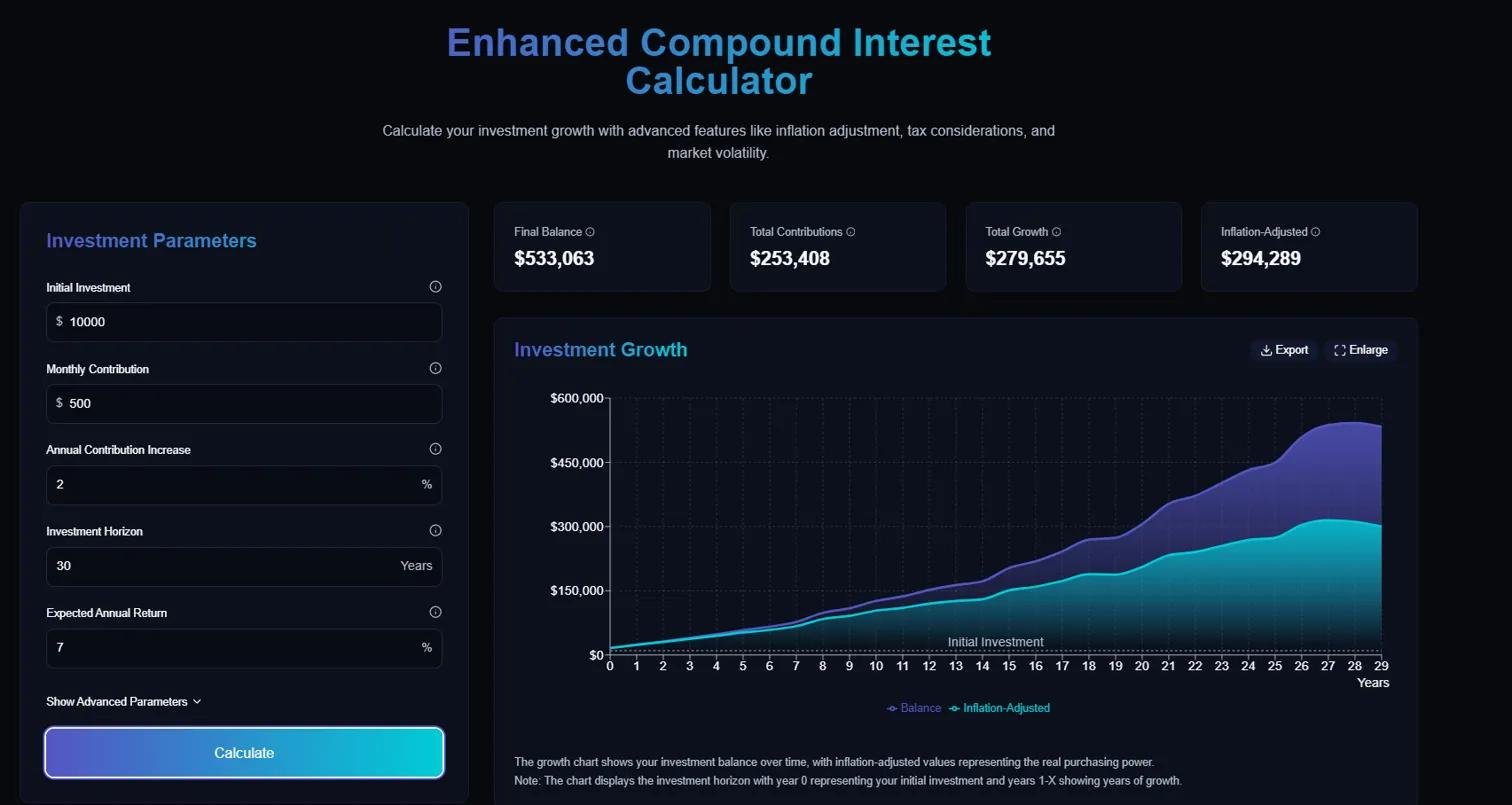
Let me give you some honest numbers so you can plan clearly.
- $5,000 in a high-yield compound interest account at 5% APY for 5 years = approximately $6,381. That’s $1,381 in interest with zero effort.
- $10,000 in the same account for 10 years at 5% = approximately $16,289. Compounding nearly doubles your money in a decade.
- $500/month added to a savings account at 5% APY over 10 years = approximately $77,000. Consistent contributions turbocharge the effect.
High-yield savings accounts were offering 4.5 — 5.5% APY in 2025–2026, though rates can change with Federal Reserve policy.
One important US tax note: interest earned in a standard compound interest savings account is taxable income. You’ll receive a 1099-INT from your bank each January for any interest over $10. A Roth IRA, however, lets your compound growth accumulate completely tax-free , a powerful advantage worth considering.
For a deeper look at how compound interest accounts fit into a broader wealth strategy, check out the ultimate guide to passive income investments for financial freedom in 2026.
Best Tools and Platforms for Opening a Compound Interest Account
Ally Bank
Ally is one of the most popular online banks in the US for high-yield savings. Their savings account compounds daily, carries FDIC insurance, has no minimum balance, and no monthly fees. The mobile app is clean and easy to use. This is where I keep my personal emergency fund.
Marcus by Goldman Sachs
Marcus offers competitive APYs on both high-yield savings and CDs. It’s a fully protected compound interest account with FDIC coverage, zero fees, and a straightforward interface. Their CD terms range from 6 months to 6 years , plenty of flexibility depending on your timeline.
Bankrate CD and Savings Calculators
Before opening any account, I always run the numbers. Bankrate’s free tools let you model a compound interest account or use their CD compound interest calculator to see exactly what a specific deposit will grow over time. It takes the guesswork out of comparing options. Also worth reading: long-term investments: best strategies to build wealth in 2026 for context on how savings accounts fit into a complete wealth-building picture.
And if you want to explore all the asset types available to you beyond savings accounts, 7 types of investments for beginners to build wealth in 2026 is a great next read.
Start Your Compound Interest Account Today
A savings account is one of the simplest tools for building wealth. In fact, it is very powerful. However, many people do not have one or are not using the right type. In addition, the math is simple. The earlier you open a savings account, the better. Moreover, the more you add to it, the more your money grows on autopilot.
You don’t need a lot of money to start. You don’t need to be a finance expert. And you just need to open the right savings account, automate your contributions, and let time do the heavy lifting. Head to nativesmoney.com for more practical money guides that help you build real wealth, step by step, without the overwhelm.