
I spent two full years asking myself how to invest money before I actually did anything. Every time I researched, I’d hit a wall of jargon and contradicting advice. One person said to buy real estate. Another said stick to index funds. Someone else said crypto was the future. I had no framework for deciding who to listen to, so I did nothing , and lost two years of compounding that I can’t get back.
The truth is that learning is not complicated once someone breaks it down honestly. You don’t need a finance degree. You don’t need a large starting balance. And you need a clear sequence of steps, the right accounts, and the patience to let time do the heavy lifting. That’s it.
This guide tells you exactly how to invest money in 2026 , step by step, using real platforms, with honest expectations. Whether you have $50 or $5,000 to start, this is the foundation you need to build real, lasting wealth.
What It Actually Means to Invest Money , And Why It Matters

When you invest money, you put it into assets that grow over time , stocks, bonds, real estate, index funds. The goal is simple: your money works for you instead of sitting idle. A dollar in a checking account stays a dollar. A dollar invested wisely becomes $2, then $4, then $8 over time through compounding.
Think of it like planting a tree. You do the work once, plant the seed, water it occasionally, and it grows bigger every year without you touching it. The earlier you plant, the larger the tree becomes. People who figure out investing in their 20s end up with forests. People who wait until their 40s end up with saplings.
Many beginners ask: how to earn money online without investment? Side hustles, freelancing, and digital products are real answers to that question. But here’s the thing , the money you earn through those methods grows fastest when you invest it. Earning without investing builds income. Investing builds wealth. Both matter, and they work best together.
The question ‘are bonds a good investment?’ comes up often at this stage. Yes , bonds belong in most portfolios as a stabilizer. But for someone just learning how to invest money, stocks and index funds typically come first. Bonds add stability later as your portfolio grows. We’ll cover both in detail.
How to Invest Money: The Step-by-Step Sequence
Follow this sequence. Each step builds the next one. Don’t skip ahead.
Step 1: Build Your Foundation First
Before you learn how to invest money in the market, cover three basics: pay off high-interest debt (anything above 15% APR), build a 3-month emergency fund in a high-yield savings account, and capture your full employer 401k match if you have one. Skip any of these and you undermine the returns you’re trying to build.
The employer match is especially important. If your company matches 100% of contributions up to 3% of salary, that’s an immediate 100% return on your money. No investment in the world guarantees that. Always get the match before anything else.
Step 2: Open a Roth IRA , Your Best Account
A Roth IRA is where most Americans should invest money next. Open one at Fidelity or Vanguard in about 15 minutes. You contribute after-tax dollars, but all growth and qualified withdrawals are completely tax-free. The 2026 contribution limit is $7,000/year if you’re under 50.
No minimums at Fidelity. No commissions. And no excuses. A Roth IRA is the most powerful account available to everyday Americans for building tax-free wealth , and most people either don’t have one or haven’t used it fully.
Step 3: Start With a Total Market Index Fund
Once your Roth IRA is open, the best first investment is a total US market index fund. At Fidelity, that’s FZROX , zero expense ratio, no minimum, instant diversification across thousands of US companies. At Vanguard, it’s VTSAX or VTI.
This single fund gives you broad exposure to the entire US economy. You don’t need to research individual companies. You don’t need to pick winners. The index does that for you by holding everything. It’s the easiest, most proven way to invest money for long-term wealth.
Step 4: Learn How to Invest Money in Stocks (Individual Companies)
Once you have your index fund foundation running, you can learn about individual companies. This requires more research: you need to understand a company’s revenue growth, profit margins, competitive position, and valuation. Start with established companies you already understand.
The best stocks for long term investment share common traits: consistent revenue growth, strong gross margins, a clear competitive advantage, and a large addressable market. Think about companies that dominate their industry and have done so for years. Learning takes time, use index funds as your core and add individual stocks as your knowledge grows.
Step 5: Add Bonds for Stability
As your portfolio grows, bonds provide stability during stock market downturns. Yes, but not as your primary vehicle when you’re young. Short-term bond funds (BSV, SHY) and bond index funds (BND) reduce volatility without eliminating growth. Are bonds a good investment for younger investors specifically? At a small allocation, 10–20%, yes. More than that slows long-term compounding unnecessarily.
Step 6: Automate Contributions and Stay Consistent When Learning How to Invest Money
The most powerful thing you can do after figuring it out is automate it. Set a monthly transfer from your bank to your Roth IRA on payday. Invest it automatically in your chosen fund. Then don’t touch it. The hardest part of learning isn’t the research, it’s the behavior of staying consistent through market volatility.
Market drops happen. Bear markets happen. Every single one in US history has been followed by a recovery that exceeded the previous high. Stay invested. Keep contributing. That consistency is worth more than any single smart investment decision.
Mistakes to Avoid When You Invest Money: How to Invest Money Wisely
These are the patterns that cost beginners real money. Avoid them from day one.
- Skipping index funds to pick individual stocks too early. Many beginners want to find the best stocks right away. But researching individual companies well takes real skill and time. Start with index funds, build your knowledge, and add individual stocks later. The best stocks won’t disappear while you learn the fundamentals.
- Trying to time the market. Waiting for the ‘right moment’ to invest money means you almost always miss it. Research shows that investing immediately , even at a market high , beats waiting for a dip in most historical scenarios. Time in the market wins over timing the market, every time.
- Neglecting to invest earnings from online income. Many people who learn how to earn money online without investment through freelancing or side hustles spend all of it on lifestyle upgrades. The smarter move: invest a portion of every online income payment. How to earn money online without investment is step one. Investing that income to build wealth is step two.
- Paying high fees without realizing it. A 1% expense ratio versus 0.03% on a $100,000 portfolio costs you approximately $280,000 in lost compounding over 30 years. Always check the expense ratio on every fund you invest money into. Low-fee index funds consistently outperform high-fee actively managed funds over long periods.
What to Realistically Expect When You Invest Money
Year one feels slow. Your balance grows, but the numbers look small relative to your goals. This is normal. The first year is about building the habit and the infrastructure , the right account, the right allocation, the automatic contributions.
Years three through five: compounding starts showing up. Your portfolio grows faster each year than it did the year before. The automatic nature of the whole system starts feeling effortless because it is , you set it up once and it runs.
Here is real math on how to invest money in stocks through an index fund: $400/month at 8% average annual return grows to roughly $590,000 over 30 years. Total contributions: $144,000. The remaining $446,000 is compounding. That is what consistent investing actually produces. No tricks, no timing, no stock picking , just patience and a good index fund.
Tax-wise: gains in a Roth IRA are tax-free. Gains in a taxable brokerage face long-term capital gains rates (0-20% depending on income). Are bonds a good investment for your taxable account? Municipal bonds are especially attractive in taxable accounts because they are exempt from federal income tax. Keep this in mind as your portfolio grows.
Best Platforms to Invest Money in 2026: How to Invest Money Smarter
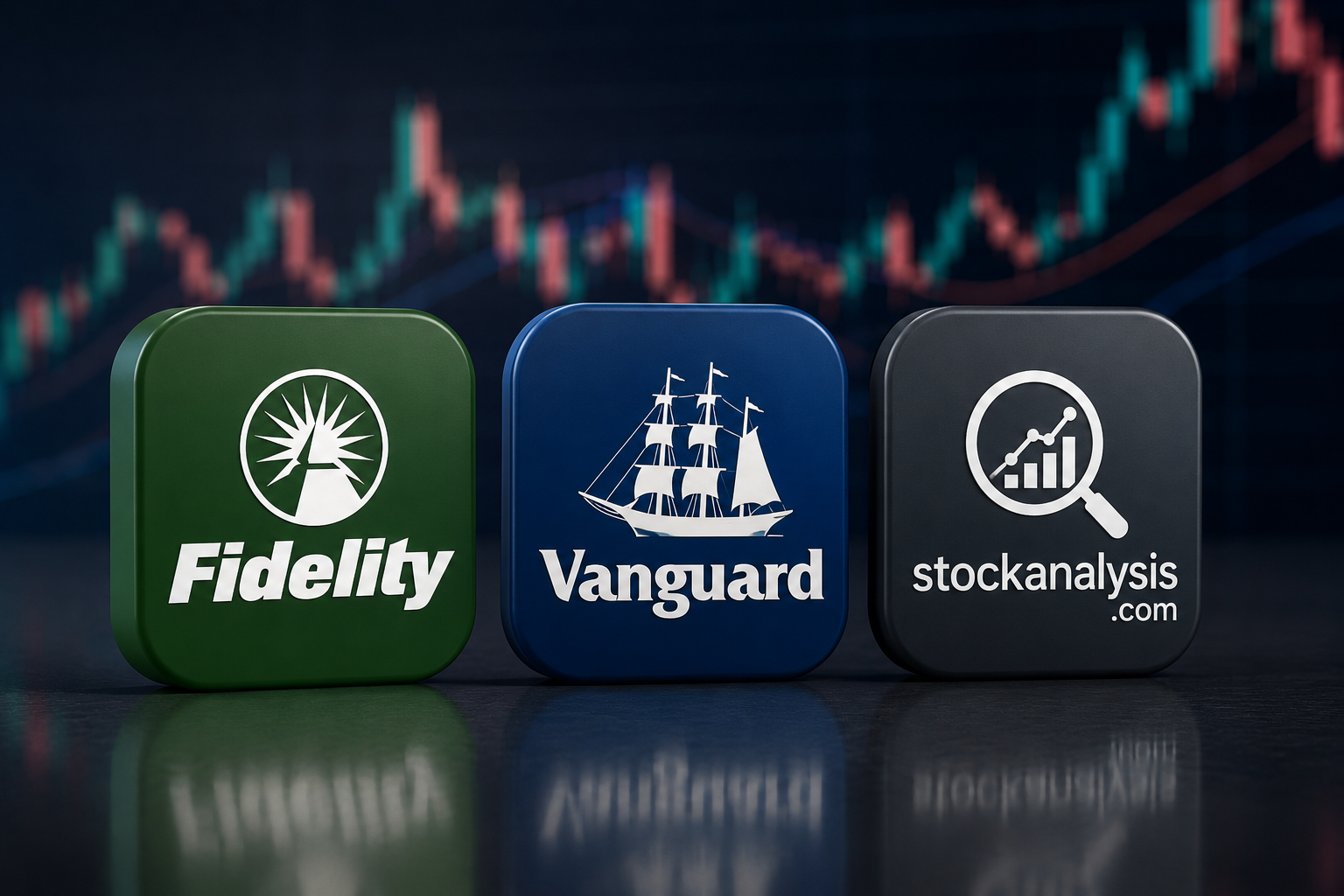
Here is where I would actually open accounts today:
- Fidelity (free, zero minimums) , Open a Roth IRA and invest money in FZROX for zero-fee total market exposure. Also strong for researching how to invest money in stocks , their research tools, earnings data, and screeners help you identify best stocks for long term investment without a paid subscription.
- Vanguard (free) , The original home of index fund investing. VTI, VTSAX, and VXUS give you complete global market exposure at some of the lowest fees in the industry. Investor-owned structure means profits go back to fund shareholders , not a parent corporation.
- Stockanalysis.com (free) , For researching individual companies before you invest money in specific stocks. Clean data, no subscription required. Shows revenue growth, margins, P/E ratios, and dividend history , everything you need to evaluate whether a company qualifies as a best stock for long term investment.
For a complete breakdown of every investment type available to you, 7 types of investments: best options for beginners to build wealth in 2026 covers all the categories in detail.
Once you have your short-term foundation sorted, long-term investments: best strategies to build wealth in 2026 gives you the full roadmap for the wealth-building phase.
And for how your invested money eventually generates income on its own, the ultimate guide to passive income investments for financial freedom shows you the end goal.
The Bottom Line
Knowing how to invest money is not about finding secret strategies or timing the market perfectly. It’s about opening the right account, choosing low-cost index funds, automating contributions, and staying consistent for years. That simple approach, applied patiently, builds more wealth than most complex strategies beginners try.
Stop waiting until you feel ready, that moment rarely comes naturally. Open a Roth IRA at Fidelity today, invest in a total market index fund, set up automatic monthly contributions, and let compounding run. The best time was years ago. The second best time is right now.
FAQ: How to Invest Money in 2026
How do I invest money as a complete beginner?
To invest money as a complete beginner: open a Roth IRA at Fidelity (zero minimums, zero fees), invest in FZROX , a total US market index fund , and set up automatic monthly contributions. Start with whatever you can afford, even $50. The habit matters more than the amount. As your income grows, increase contributions toward the $7,000 annual Roth IRA limit. That’s a complete, proven way to invest money for long-term wealth without any complexity.
How do I invest money in stocks as a beginner?
To invest money in stocks as a beginner, start with a total market index fund rather than individual stocks. Index funds hold thousands of companies at once, so no single stock can derail your portfolio. Once you understand how to invest money in stocks through index funds and feel ready to research individual companies, use Fidelity’s research tools or Stockanalysis.com to evaluate revenue growth, gross margins, and valuation before buying. Never put more than 5-10% of your portfolio in a single stock when starting out.
What are the best stocks for long term investment in 2026?
The best stocks for long term investment share these traits: consistent revenue growth of 15%+ annually, gross margins above 50%, a strong competitive advantage (brand, network effects, or switching costs), and a large addressable market. Rather than naming specific stocks, which change with market conditions, I’d point to sectors: technology (especially AI infrastructure and cloud computing), healthcare, and consumer brands with global reach consistently produce the best stocks across market cycles. Always research before buying.
How can I earn money online without investment first?
You can earn money online without investment by doing freelance work like writing, graphic design, coding, or marketing on platforms such as Upwork and Fiverr. You can also teach students online through sites like Wyzant or Tutor.com, sell digital products on Gumroad, or earn through affiliate marketing using a free blog or social media page.
Once you start making money from these methods, save and invest part of your income right away. Learning how to earn money online without investment is a great first step. But investing that income is what helps turn short-term earnings into long-term wealth.
Are bonds a good investment for someone just starting out?
Yes, bonds can be useful in small amounts. If you’re in your 20s or 30s and learning how to invest money, most of your portfolio should still be in stocks and index funds. A good range is around 80–90%. These investments usually grow more over time.
Bonds can still play a role. Keeping 10–20% in bonds can make your portfolio safer and reduce market ups and downs. But if you’re young, bonds should not be your main investment. They grow more slowly than stocks. Over many years, that slower growth can reduce how much wealth you build.