

For two years I wanted to create a YouTube channel. Two years. I had topics I was passionate about, I knew there was money to be made, and I had a decent microphone sitting in a drawer collecting dust. The only thing stopping me was a camera, a ring light, and the terrifying idea of putting my face on the internet for strangers to judge.
So I just… didn’t. And I watched other people build audiences and income streams while I kept telling myself I’d start “when everything was ready.” If that sounds familiar, this article is for you. Because what finally got me to actually create a YouTube channel wasn’t better equipment or a confidence boost , it was discovering that I didn’t need to be on camera at all.
That’s what this article is about: how to create a YouTube channel the faceless way using Pictory AI, why this approach works even for complete beginners, and what you can realistically earn if you stick with it. Let’s get into it.
What a Faceless YouTube Channel Actually Is
A faceless YouTube channel is exactly what it sounds like , a channel that publishes videos without the creator ever appearing on screen. Instead, the videos use stock footage, screen recordings, animated text, voiceovers, or a combination of all four to deliver content.
If you’ve ever watched a “top 10” video, a documentary-style explainer, or a news summary channel on YouTube, you’ve probably already watched a faceless channel without realizing it. Many of them get millions of views and earn serious ad revenue through YouTube’s Partner Program , all without a face, a studio, or a fancy camera setup.
Knowing how to create a YouTube channel in this style is now easier than ever because of tools like Pictory AI, which automates most of the video creation process. Instead of spending days editing footage, you can turn a written script into a finished video in under an hour.
How to Create a YouTube Channel Using Pictory AI: Step by Step

Here’s the exact process I used to go from zero to a published channel. This is genuinely how to start a YouTube channel without putting your face on camera.
Step 1: Set Up Your Google Account and YouTube Channel
If you have a Gmail account, you already have access to YouTube. Go to YouTube, click your profile icon, and select “Create a channel.” Give it a name that reflects your niche , something memorable and searchable. This is the foundational step in how to make a YouTube channel, and it takes about five minutes.
Keep the channel name simple and niche-specific. A channel called “Quick Money Moves” is better than “JohnDoe2026” if you’re making finance content.
Step 2: Choose Your Niche Carefully
The biggest mistake people make at this stage is picking a topic that’s too broad. “Finance” is not a niche “passive income for beginners” or “side hustles for college students” is a niche. Before you create a YouTube channel, focus on choosing a specific audience and content direction that makes your videos easier to discover and helps viewers understand exactly what your channel offers.
I chose educational finance content aimed at people just starting to learn about money, which fit naturally with what I was already reading about. Pick something you can create at least 50 video ideas around before you get tired of it.
Step 3: Sign Up for Pictory AI
Pictory AI is a tool that converts scripts or blog articles into ready-to-publish videos automatically. You paste in a script, and it matches each section with relevant stock footage, adds captions, and lets you drop in an AI voiceover.
Pictory has a free trial, so you can test the workflow before paying anything. Paid plans start around $19/month, which is manageable once your channel is generating any income. This is one of the most accessible tools for anyone figuring out how to create a youtube channel without video production experience.
Step 4: Write or Generate Your Scripts
Every video starts with a script. I write mine in a conversational tone , short sentences, clear structure, no jargon. A 5-7 minute video typically runs about 700-900 words of script.
I use ChatGPT to generate a rough first draft and then edit it heavily to match my voice and add accurate facts. The script quality directly affects the final video quality, so don’t skip this step.
Step 5: Import Your Script into Pictory
Once your script is ready, paste it into Pictory’s “Script to Video” feature. Pictory will automatically break the script into scenes and pair each scene with stock footage from its built-in library.
You can then go through scene by scene and swap out footage clips that don’t fit, adjust the pacing, and fine-tune the overall feel. This part usually takes me 30-45 minutes per video, which is dramatically less than traditional video editing.
Step 6: Add a Voiceover
Pictory has built-in AI voices, or you can upload your own recorded voiceover. If you want a fully faceless, voice-free setup, the AI voices work fine , just pick one that matches your channel’s tone.
I personally record my own voiceover and drop it into Pictory, which keeps the content feeling more personal without requiring me to be on camera. This is entirely optional though.
Step 7: Export, Upload, and Optimize Your Listing
Once your video is done, export it from Pictory and upload it to YouTube. Write a keyword-rich title, description, and tags. Design a thumbnail using Canva , this is one of the highest-impact things you can do for click-through rate.
Consistency matters more than perfection here. Publishing one video per week for six months will always outperform publishing three videos in one week and then disappearing.
Mistakes I Made When I First Tried to Create a YouTube Channel

Mistake #1: Picking a niche with no audience. My first attempt at a channel was in a topic I personally loved but that had almost no search volume on YouTube. Nobody was looking for that content. Lesson learned: validate your niche by searching your topic on YouTube before building a channel around it.
Mistake #2: Ignoring thumbnails. I uploaded my first five videos with generic, auto-generated thumbnails. The click-through rates were terrible. Once I started designing thumbnails in Canva using bold text and high-contrast visuals, my impressions-to-clicks ratio improved significantly.
Mistake #3: Quitting too soon. I paused the channel for six weeks after feeling like nothing was working. When I came back, I found that a couple of my earlier videos had quietly picked up views from YouTube search. The algorithm rewards patience , most channels see no real traction until months three to six.
Mistake #4: Not batch-creating content. I used to make one video at a time, which meant any week I got busy, nothing got published. Once I started batch-creating four videos in a single weekend and scheduling them out, my publishing consistency improved dramatically.
What to Realistically Expect When You Create a YouTube Channel
Here’s what people don’t tell you: most channels don’t make a dollar for the first three to six months. YouTube’s Partner Program requires 1,000 subscribers and 4,000 hours of watch time before you can monetize through ads. For a brand-new channel, that typically takes four to twelve months depending on your niche and posting consistency.
My channel hit monetization eligibility around month seven. In my first monetized month, I earned $73 in ad revenue. Not impressive , but proof of concept. By month ten, I was pulling in $200-400/month from ads alone, with additional income from affiliate links in video descriptions.
On the US tax side, YouTube ad revenue is reported as self-employment income. Google will issue a 1099 if you earn over $600/year through AdSense. Set aside 25-30% of your earnings for taxes and consider opening a separate savings account specifically for that purpose , it saves a lot of stress at tax time.
Best Tools and Resources for Faceless YouTube Success
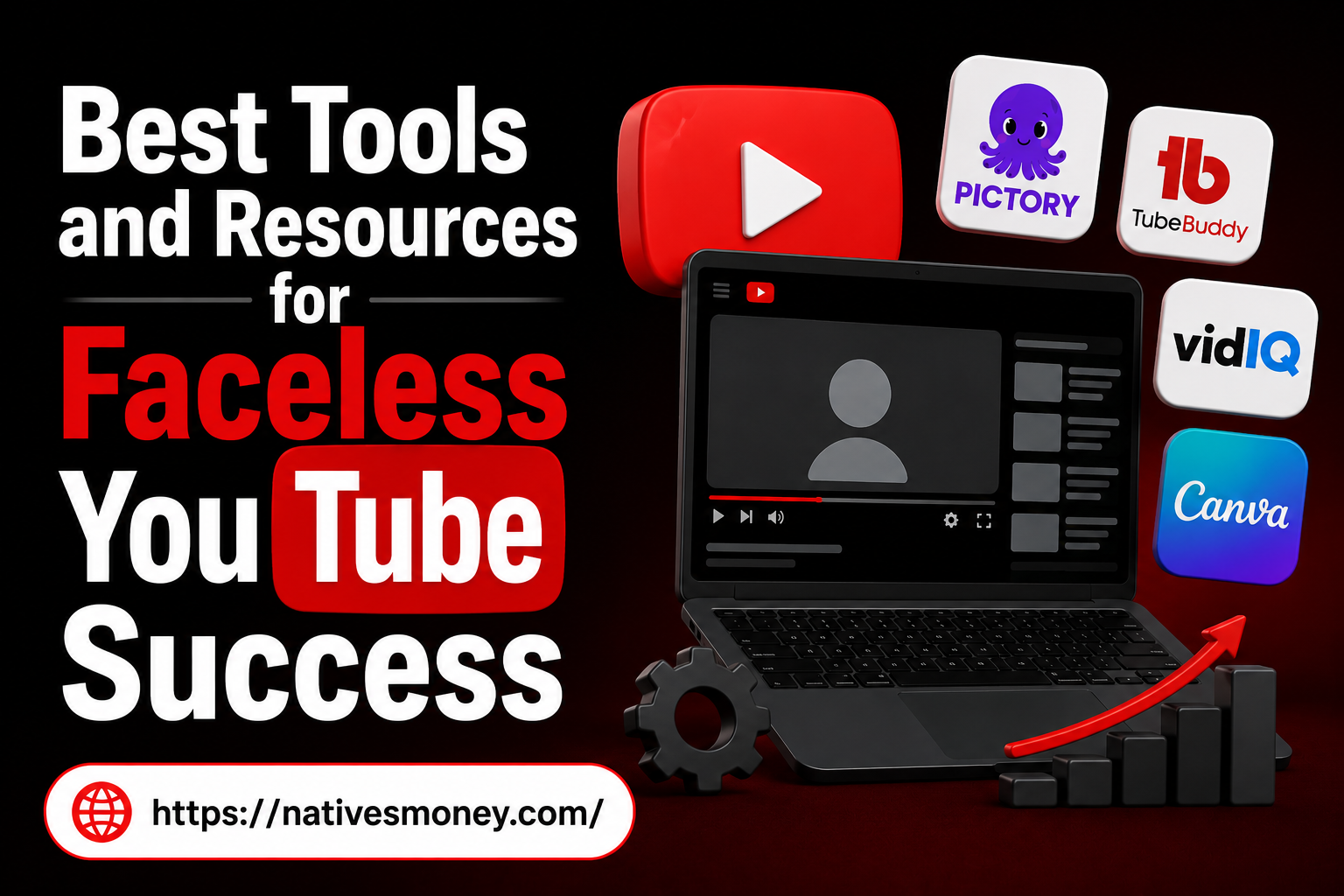
If you’re ready to seriously create a YouTube channel the faceless way, here are the tools I’d start with:
Pictory AI is the core tool for turning scripts into videos without traditional editing skills. Start with the free trial and upgrade only when you’re consistently publishing and seeing results.
TubeBuddy or VidIQ (both have free tiers) are browser extensions that help with YouTube SEO , keyword research, tag suggestions, competitor analysis. These are especially useful when you’re learning how to start a YouTube channel from scratch and don’t know what people are actually searching for.
Canva (free plan available) handles all your thumbnail design needs. A clean, bold thumbnail is one of the biggest drivers of clicks on YouTube, so don’t skip this.
For more real-world strategies to build income from content and entrepreneurship, visit the Entrepreneurship section at Natives Money , it’s full of honest, practical breakdowns like this one.
The Bottom Line
The decision to create a YouTube channel doesn’t have to involve cameras, lighting rigs, or putting your face online. With tools like Pictory AI, anyone willing to put in consistent effort can build a faceless channel that generates real income over time.
I’m not going to tell you it’s fast , it’s not. But it’s one of the most rewarding content-based income streams I’ve built, because the videos keep earning long after you publish them. If you’re ready to stop overthinking and actually create a youtube channel that works for you, start with one video this week. That’s all it takes to begin. For more income ideas built from real experience, keep exploring nativesmoney.com.
Frequently Asked Questions
How do I create a YouTube channel for free?
You can create a YouTube channel entirely for free using a Google account. Go to YouTube, click your profile icon, and select “Create a channel.” Learning how to create a youtube channel doesn’t require any paid tools at the start , Pictory AI and other production tools only come in once you’re ready to produce content.
How to start a YouTube channel with no camera?
The easiest path to start a YouTube channel without a camera is through faceless video production , using stock footage, text animations, and AI voiceovers instead of on-camera recording. Pictory AI is one of the best tools for this approach, turning written scripts into finished videos automatically.
How to make a YouTube channel actually earn money?
To make a YouTube channel earn money, you need to qualify for the YouTube Partner Program (1,000 subscribers and 4,000 watch hours), then enable ad monetization. Beyond ads, affiliate links, sponsorships, and digital product sales in video descriptions are all income streams you can layer in once you have an audience.
How to create a YouTube channel in a profitable niche?
To create a youtube channel in a profitable niche, search your topic on YouTube first and look for channels with steady view counts on recent uploads. Finance, health, self-improvement, and business education all tend to attract higher-paying advertisers, which means more ad revenue per thousand views.
How long does it take to make money after you create a YouTube channel?
Most channels take four to twelve months to reach YouTube monetization eligibility after they create a youtube channel. Actual ad income in the first monetized months is usually modest ($50-200/month), but grows as your video library and watch time accumulate. Consistency is the single biggest factor in how fast you grow.