
Money management tips are very important for anyone who wants to build a secure financial future. Managing money is not just about saving small amounts here and there. Instead, it is about building simple habits that support your long-term financial stability.
Many people struggle with money, not because they earn less, but because they do not have a clear system. The good news is that you do not need to be a finance expert to take control of your money and improve your financial life.
This guide explains simple and practical money management tips that you can easily follow in your daily life. These tips are designed to improve your money management skills and help you make better financial decisions over time.
They also support your financial planning and budgeting habits, making it easier to stay on track in the long run. Whether you are just starting or trying to improve past mistakes, these strategies can help you feel more confident and in control of your money.

Money affects almost every part of your life, from daily comfort to long-term security. When it is not managed properly, even a good income can feel limited. On the other hand, strong financial habits can make a smaller income go much further.
That is why applying simple money management tips consistently is so important. They help you stay in control, make better decisions, and improve your overall financial stability over time.
One thing I have personally noticed is that financial stress often comes from uncertainty. When you do not know where your money is going or how much is left, it creates anxiety.
However, once you start organizing your finances with simple budgeting tips and basic personal finance habits, that stress slowly begins to reduce. As a result, you feel more in control, and making financial decisions becomes much easier.
Money management tips are not about strict restrictions. Instead, they are about making sure your spending matches your priorities.
When done correctly, they help you enjoy your life today while also preparing for the future. In this way, smart financial habits give you balance, control, and long-term stability.
Budgeting: The Starting Point of Financial Control
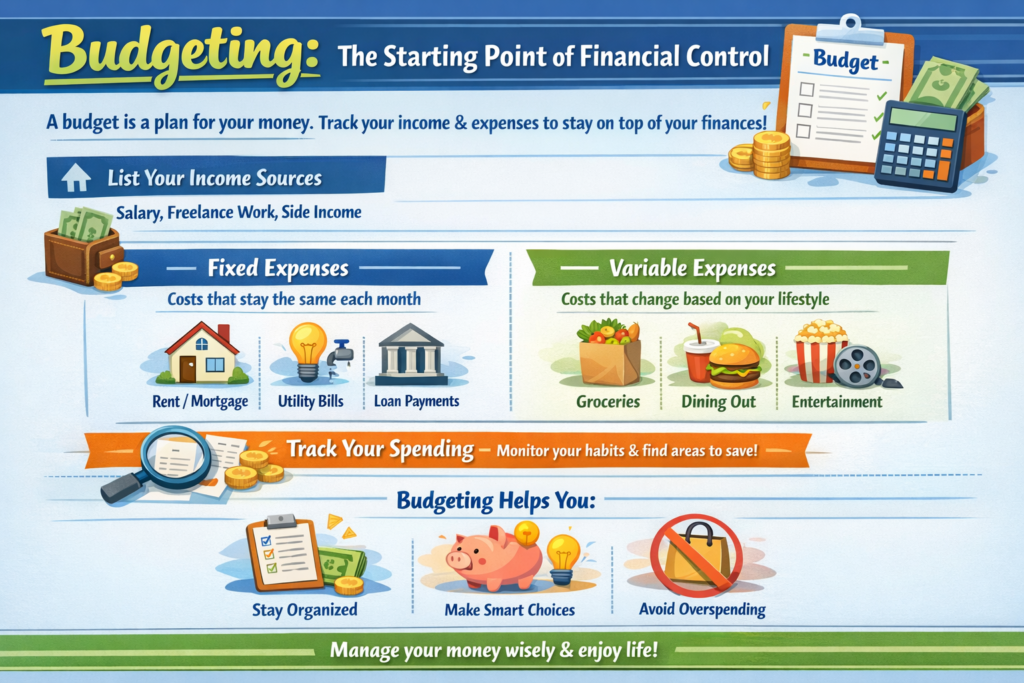
A budget is a simple plan for your money. It helps you clearly see how much you earn and how you spend it.
Without a budget, it is easy to lose track of your expenses. As a result, you may end up overspending without even realizing it. That is why following money management tips is very important for staying financially stable and in control of your money.
Start by writing down all your sources of income. This may include your salary, freelance work, or any side income.
Next, list all your expenses. After that, divide them into two simple categories:
Fixed Expenses
These are costs that stay the same every month, such as:
- Rent or mortgage
- Utility bills
- Loan payments
Variable Expenses
These change based on your lifestyle, such as:
- Groceries
- Dining out
- Entertainment
Tracking your spending for at least one month gives you a clear view of your financial habits. You may be surprised to see how much money goes into small, frequent purchases.
Once you understand this, it becomes easier to make better decisions. Using simple budgeting tips along with smart financial planning helps you stay organized and in control of your money.
Budgeting works best when you actively track your expenses. This is one of the most important money management tips for beginners.
You can use simple tools like:
- A notebook
- Google Sheets
- Apps like Mint, YNAB, or Money Manager
Tracking your expenses helps you clearly understand your spending patterns. For example, you may realize that frequent online orders or food deliveries are slowly reducing your budget.
Once you become aware of these habits, it becomes easier to make changes. These small but important insights help you improve your daily financial decisions and build better money management strategies over time.
When I started tracking my own expenses, I realized that even small daily spending can add up to a large amount by the end of the month. Once I clearly saw the numbers, it became much easier to cut back without feeling deprived. Simple budgeting tips made this process even easier and more effective.
Awareness is very powerful. When you clearly understand where your money is going, you naturally start making better financial choices. Over time, this helps you improve your spending habits and manage your personal finances more effectively.
Money Management Tips: Build an Emergency Fund for Unexpected Situations
Life is unpredictable. Medical bills, car repairs, or sudden job loss can happen at any time. If you don’t have savings, these situations can quickly create serious financial stress.
That is why having an emergency fund is very important. It is a key part of financial planning and helps you build strong money management skills.
Ideally, you should try to save enough to cover three to six months of living expenses. However, if that feels difficult, start small. Even saving $500 to $1,000 can help a lot during emergencies. This is a simple and practical approach that improves your financial stability over time.
The most effective approach is to treat savings like a fixed monthly expense. This helps you build discipline over time and stay consistent with your financial goals. Keeping this money in a separate savings account also reduces the temptation to spend it and encourages better financial habits.
Having an emergency fund gives you real peace of mind. It prepares you for unexpected situations like medical bills, car repairs, or sudden expenses.
With this safety net, you do not need to rely on credit cards or take loans. As a result, it helps you avoid debt and builds stronger financial stability over time.
Money Management Tips: Set Realistic Financial Goals
Without clear goals, it becomes easy to lose motivation. That is why money management tips focus on setting clear financial targets.
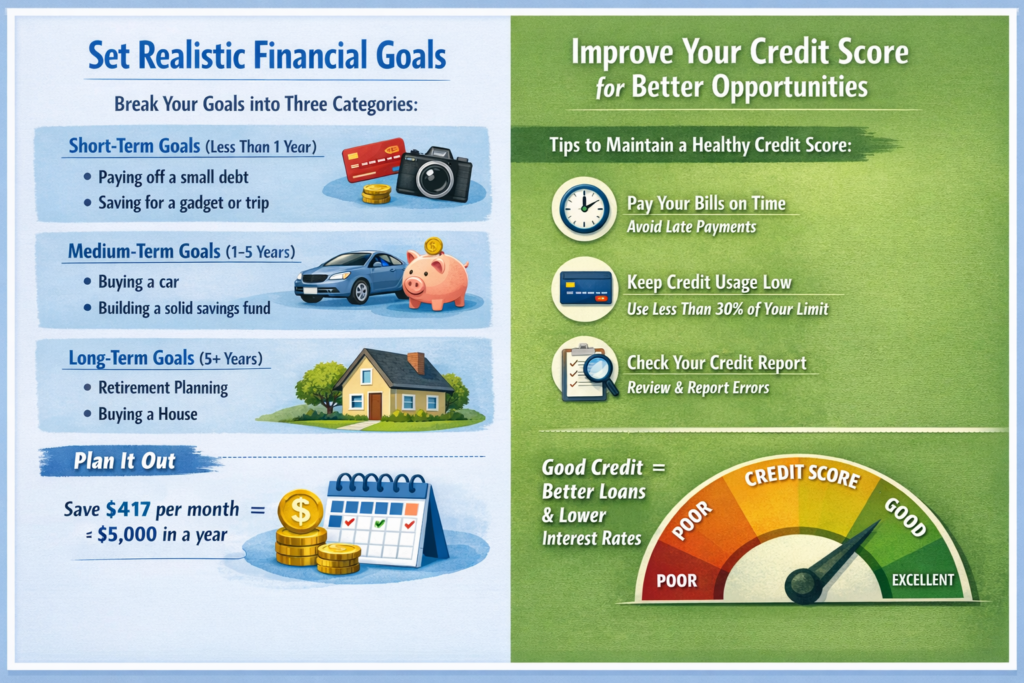
To make it simple and practical, you can divide your goals into three basic categories:
Short-Term Goals (Less than 1 year)
- Paying off a small debt
- Saving for a gadget or trip
Medium-Term Goals (1–5 years)
- Buying a car
- Building a solid savings fund
Long-Term Goals (5+ years)
- Retirement planning
- Buying a house
Once you define your goals, break them into smaller steps. For example, if you want to save $5,000 in a year, you need to set aside around $417 per month. This is where practical financial planning tips and money management strategies come into play.
This approach makes big goals feel much more achievable. It also keeps you motivated because you can clearly see your progress over time. As a result, it becomes easier to stay consistent by using simple personal finance tips in your daily life.
Improve Your Credit Score for Better Opportunities for Money Management Tips
Your credit score plays an important role in your financial life. It affects your ability to get loans, rent a house, and sometimes even apply for certain jobs.
That is why maintaining a good credit score is very important. It is a key financial skill and an important part of smart financial planning.
Good credit is not built in a day. It takes time and consistent effort to improve it.
However, small and steady actions can make a big difference over time. By staying consistent, you can slowly build a stronger financial future and improve your credit health.
- Pay your bills on time – Late payments can seriously damage your credit score.
- Keep your credit usage low – Try to use less than 30% of your total credit limit.
- Review your credit report regularly – Check for errors and report any issues as soon as possible.
For example, if your credit card limit is $5,000, try to keep your balance below $1,500. This helps you use credit responsibly and shows healthy financial behavior. As a result, it also reflects strong personal finance habits and supports a better credit score over time.
Following these simple money management tips can improve your chances of getting a loan approved. Over time, they may also help you qualify for lower interest rates, as lenders see you as a more responsible borrower.
Manage Debt Without Feeling Overwhelmed
Debt is common, but it needs to be managed carefully. That is why money management tips often include structured repayment strategies.
These strategies help you stay organized, reduce stress, and gradually pay off what you owe in a more controlled way.
Start by writing down all your debts in one place. This will help you clearly understand your total financial situation.
Make sure you include every detail, such as:
- Total amount owed
- Interest rate
- Minimum monthly payment
Once you have a clear picture of all your debts, the next step is to choose a repayment strategy that suits your situation.
This will help you stay organized, reduce stress, and pay off your debt in a more structured way.
Debt Snowball Method
Focus on paying off your smallest debt first while continuing to make minimum payments on all other debts. This approach helps you stay motivated because you see quick progress in a short time.
As a result, it keeps you encouraged and supports better money management strategies for long-term debt repayment.
Debt Avalanche Method
Pay off the debt with the highest interest rate first. This method helps you reduce the total amount of interest you pay over time, which saves you more money in the long run.
It is a smart approach that aligns with effective personal finance habits and improves your overall financial control.
Both methods work—it depends on what keeps you consistent.
The key is to stay committed and apply strong budgeting tips while avoiding new unnecessary debt.
Money Management Tips: Create Healthy Spending Habits
One habit that has helped me personally is the “pause before buying” rule. If something is not essential, I wait at least 24–48 hours before purchasing it.
Most of the time, the urge to buy it fades away. This simple habit is one of the most effective personal finance tips because it helps you avoid impulse spending and make more thoughtful decisions.
Use Simple Tools to Stay Organized
Some practical options include:
- Budgeting apps like Mint or YNAB
- Spreadsheets for custom tracking
- Banking apps with built-in expense summaries
Money Management Tips: Focus on Progress, Not Perfection
Final Thoughts
Over time, these habits become a natural part of your routine. As a result, you feel less financial stress and gain better control over your money. You also build more confidence in your financial future. By improving your money management skills, following simple personal finance tips, and using smart money management strategies, you can create a stable and secure financial life.
The key is to start from where you are and stay consistent. Even small improvements today can lead to a much stronger financial position tomorrow.