

My cousin taught high school math for six years before she burned out and quit. She loved teaching , she just hated everything else that came with it. The commute, the politics, the 60-hour weeks. When she discovered online tutor jobs, she was genuinely skeptical. She figured it was either low pay or a scam. Within two months of trying it seriously, she had replaced 40% of her old salary working from her kitchen table. I watched it happen, and it changed my whole perspective on what remote education work actually looks like.
If you’ve ever thought about tutoring online but talked yourself out of it , too complicated, not qualified enough, don’t know where to start , I want to push back on all of that. The barrier to entry is lower than most people think, and the demand for qualified tutors in the US has never been higher.
What Online Tutor Jobs Actually Look Like in 2026
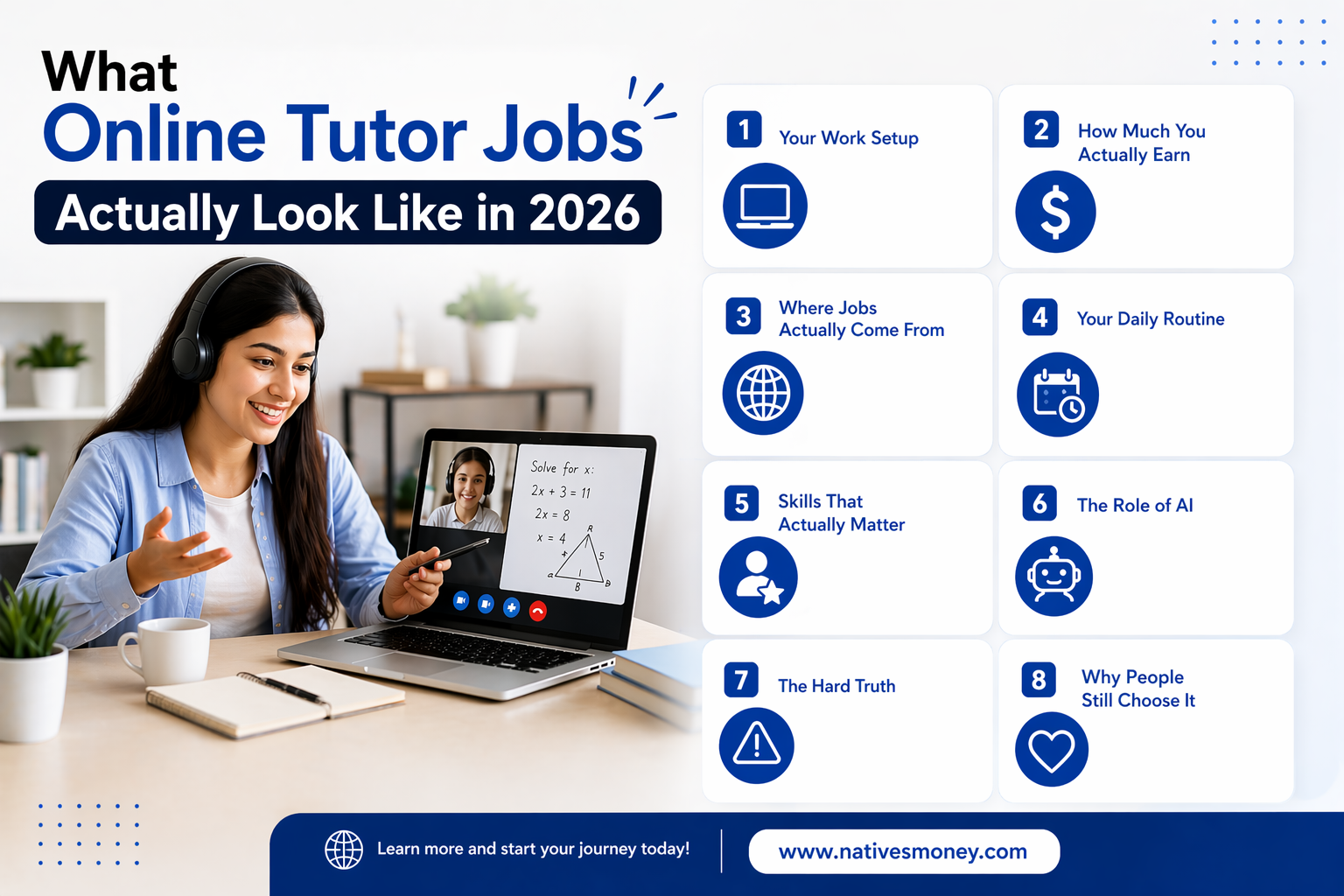
Here’s the simple version: online tutoring jobs are one-on-one or small group teaching sessions conducted over video call. You set your availability, a student books a session, and you meet on a platform like Zoom, Wyzant, or a built-in video tool. You teach for 30–60 minutes, and you get paid.
Think of it like freelancing, but for education. You’re not an employee. You’re a contractor with control over your schedule, your rates, and the subjects you teach. Some tutors work with K-12 students. Others prep adults for standardized tests like the SAT, GRE, or LSAT. Others teach coding, business English, or college-level STEM. The variety is wider than most people realize.
Online Tutor Jobs: How to Land Your First Online Tutor Job (Step by Step)
This is the practical part. Here’s what actually works when you’re starting from zero.
1. Choose Your Subject and Level
Start with what you already know well. You don’t need a teaching degree for most platforms — you need demonstrable knowledge of your subject. If you majored in biology, tutored anyone in college, or have professional experience in a field, that’s your foundation. The more specific your niche, the less competition and the higher your earning potential.
2.How to Pick the Right Platform for Online Tutor Jobs

The platform you choose matters more than most beginners realize. Here’s a quick breakdown of the main US-based options:
- Wyzant — One of the largest US tutoring marketplaces for online tutor jobs. You set your own rate, keep 75–100% of earnings as you build your reputation, and get direct access to students. Great for academic subjects and test prep.
- Tutor.com — Part of The Princeton Review. Pays hourly ($13–$20/hr starting), so it’s lower earning potential but very steady work. Good for building confidence and getting your first students quickly.
- Varsity Tutors — Strong platform for academic tutoring across K-12 and college. Pays $15–$25/hr and handles all the scheduling and billing for you. Lower admin burden.
- Cambly — Specifically for English conversation tutoring. No degree or experience required. Pay is lower ($10–$12/hr) but zero barriers and very flexible hours. A solid starting point if you want experience fast.
- Superprof — Low commission structure (0–10%) in online tutor jobs, good for tutors who want to run their own pricing strategy. Gaining traction in the US market and useful for niche subjects.
3. Build a Profile That Actually Converts
Your tutor profile is your storefront. Most people underinvest in it. A good profile photo, a specific headline (not just “Math Tutor” but “SAT Math Specialist — 200+ Point Score Increases”), and a bio that speaks directly to the parent or student’s anxiety will separate you from 90% of other tutors on the platform.
4. Set Your Rate Strategically
Mistakes to Avoid in Online Tutor Jobs (And How New Tutors Can Succeed)
A few things I’ve seen trip people up — including my cousin in her first month.
- Signing up for too many platforms at once. It feels like more opportunities in online tutor jobs, but it just spreads your reviews thin. Pick one or two platforms, build your reputation there first, and expand later when you have traction.
- Not showing up prepared. Students and parents remember the sessions where the tutor showed up without a plan. Even a loose outline of what you’ll cover builds trust immediately and leads to repeat bookings.
- Ignoring the tax side. Tutoring income is self-employment income. If you earn over $400 in a year, the IRS expects you to report it on Schedule C. Most platforms will send a 1099-NEC if you cross $600. Set aside 25–30% from every payment and consider making quarterly estimated tax payments once you’re earning consistently.
- Waiting for the platform to do all the marketing. Platforms for online tutor jobs put you in front of students, but you still need to stand out. Sharing your profile link on LinkedIn, in local Facebook groups, or with your existing network can jumpstart early bookings that the platform alone won’t generate.
What to Expect from Online Tutor Jobs (Realistic Guide for Beginners)
For someone doing this part time — say 10 hours a week — that’s $400–$800/month at mid-range rates. Full-time tutors with strong reputations and repeat clients regularly clear $3,000–$6,000/month. Both are realistic depending on how seriously you treat it.
Expect the first 30–60 days to feel slow. You’re building reviews, refining your approach, and figuring out which platform works best for you. That ramp-up period is normal and not a sign that it isn’t working. Most tutors who quit, quit too early.
Best Tools and Resources for Online Tutor Jobs

These are the practical tools I’d recommend to anyone starting out:
- Zoom (free plan) — The most universally recognized video platform for tutoring. Students and parents already know it, which removes friction. Upgrade to a paid plan only once you’re running sessions longer than 40 minutes regularly.
- Google Jamboard or Miro (free) — Digital whiteboards that make math, science, and visual subjects dramatically more engaging in a virtual setting. Students respond much better than screen-sharing a PDF.
- Calendly (free tier) — Lets students book sessions directly without the back-and-forth of scheduling. Looks professional and saves you real time once you have multiple regular students.
If tutoring is your starting point but you’re thinking about building something bigger alongside it, check out small business ideas from home you can start today — a lot of those pair naturally with a tutoring practice.
And if you want to see tutoring in the context of other income streams, extra income ideas that actually work in real life is worth a read.
The Bottom Line
Finding online tutor jobs that actually pay well isn’t complicated — but it does require making a few smart choices upfront: the right platform, a profile that speaks to what students need, and the patience to build your reputation over 60–90 days. The demand is real, the flexibility is genuine, and the income potential is far better than most side hustles people default to.
If you have knowledge worth sharing — and most people do — remote tutoring is one of the most accessible ways to turn that into consistent income from home. Take the first step today, and keep exploring Native Money for more honest, practical ways to build your income and financial future.
FAQ:
Online Tutor Jobs
Do I need a teaching degree to get online tutor jobs?
No, most platforms don’t require a teaching degree for online tutor jobs. What matters most is subject knowledge and the ability to communicate clearly. Platforms like Wyzant, Superprof, and Cambly hire tutors without formal teaching credentials. Some higher-paying platforms like Tutor.com may prefer a bachelor’s degree in the subject area, but it’s rarely a hard requirement.
What are the best platforms for remote tutoring jobs?
The best platforms for remote tutoring jobs in the US are Wyzant (for independent rate-setting and high earning potential), Tutor.com (for steady hourly work), Varsity Tutors (for structured sessions with less admin), Cambly (for English conversation with zero requirements), and Superprof (for low commission and niche subjects). The best platform for you depends on your subject, experience level, and income goals.
How much can I make with online tutoring jobs?
Online tutoring jobs pay anywhere from $10/hr on entry-level English conversation platforms to $120/hr for specialized test prep or STEM subjects. Most tutors working part time (10 hrs/week) in academic subjects earn $400–$800/month at mid-range rates. Full-time independent tutors with established reputations regularly earn $3,000–$6,000/month. Income scales with your subject, your reviews, and how consistently you work.