

I gave myself one rule for this experiment: 30 days to go from zero to a published, monetization-ready blog, using only AI content creation tools to handle the heavy lifting. No team, no outsourcing, no six-month “someday” timeline I’d use to avoid actually starting. Just a clear deadline and a stack of AI tools I’d normally use one at a time, now combined into a single, focused system.
I’d tried building blogs before and always ran out of steam around week three, buried under the sheer volume of writing required to get a content library off the ground. What’s different now is that AI content creation tools have gotten good enough to handle the heaviest lifting , research, outlining, first drafts , while I focus on strategy, editing, and the parts only a human can really do well.
This article is the actual 30-day playbook I followed, the specific tools I used at each stage, and the honest results at the end of the month. If you’ve been wondering how can I start a blog that has a real shot at making money, or you’ve stalled out before because the content volume felt impossible, this is built for exactly that problem.
What AI Content Creation Tools Actually Change About Blogging

Let me explain this simply, because the hype around AI tools can make it sound like magic when it’s really just leverage. AI content creation tools are software that helps you research topics, generate outlines, draft articles, and even suggest SEO keywords , compressing tasks that used to take hours into minutes.
Think of it like the difference between digging a garden bed by hand versus using a small tiller. The tiller doesn’t plant the garden for you, but it removes the most physically exhausting part of the job so you actually have energy left to do the parts that need real care , picking what to grow, watching it, tending it properly.
For someone wondering how can I make money blogging, the math used to be brutal: building a content library of 30-50 posts (the rough threshold where blogs start gaining real search traction) could take six months to a year of consistent, exhausting writing. With a solid AI-assisted workflow, that same content volume becomes achievable in a focused 30-day sprint.
My 30-Day Blog-Building System Using AI Content Creation Tools
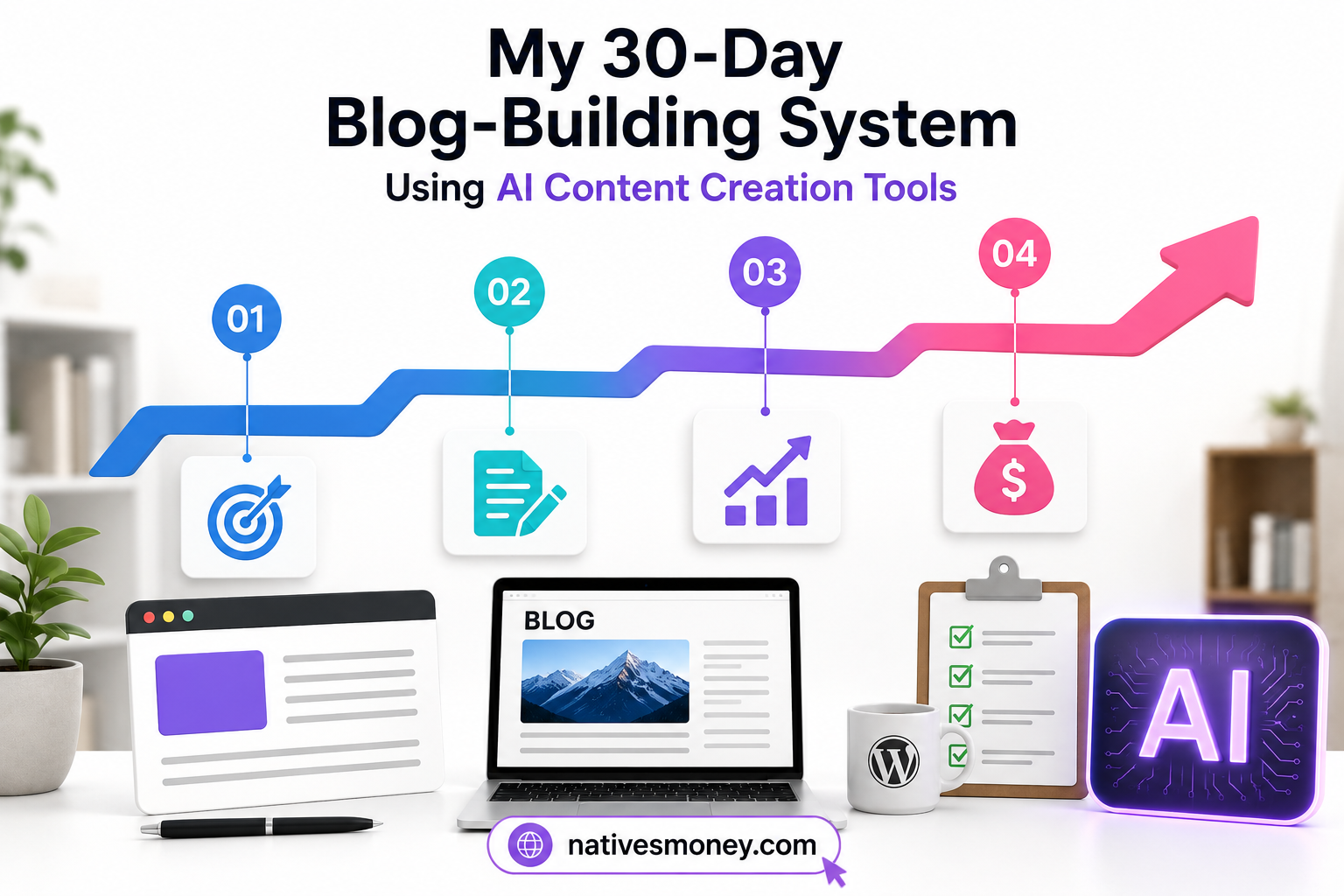
Here’s exactly how I structured the month, broken into weekly phases.
Week 1: Foundation, Niche, and Platform Setup
Days 1-2: Niche research and validation. I used ChatGPT to brainstorm niche ideas based on my existing knowledge and interests, then cross-checked search demand using Google’s free “People Also Ask” results and Ubersuggest’s free keyword tool. I landed on “budgeting for gig workers” , specific enough to own, broad enough to sustain dozens of articles.
Days 3-4: Platform and technical setup. I set up self-hosted WordPress through Bluehost (domain plus hosting ran about $90 for the year), installed a lightweight theme, and connected Google Search Console and Analytics. Anyone researching how can I start a blog the right way should treat this technical foundation as non-negotiable, even though it’s the least exciting part.
Days 5-7: Content strategy mapping. I used Claude to generate a full content map , 30 article topics organized by search intent and difficulty, ranging from beginner guides to more specific comparison posts. This list became my entire roadmap for the rest of the month.
Week 2: Building the Core Content Engine
Days 8-14: This week was about establishing my actual workflow using AI content creation tools at scale. For each article, I’d prompt ChatGPT or Claude for a detailed outline based on my target keyword, fill in personal insight and research the AI couldn’t provide, then heavily edit for voice and accuracy.
I published one article per day during this week , ten total , focusing on foundational, evergreen topics that would anchor the rest of the site. This pace would have been impossible without AI handling the first-draft heavy lifting; previously, one well-researched 1,500-word post took me three hours minimum.
Week 3: Refining Quality and Adding Depth
Days 15-21: By this point, I’d learned which AI-generated drafts needed heavy editing and which needed light touches, so my speed actually increased. I focused this week on more competitive, higher-value topics , comparison posts and in-depth guides that take more research but tend to rank better and convert better for affiliate income.
Week 4: Monetization Setup and Final Push
Days 22-26: I applied to relevant affiliate programs in my niche (budgeting apps, financial tools, and a couple of personal finance courses), and began naturally weaving affiliate links into the existing content where genuinely relevant. This is also where I started researching how to make money from blogger blogs more broadly , comparing display ad networks, affiliate income, and digital product potential for this specific niche.
Days 27-30: Final content push, technical SEO audit using Rank Math’s free checklist, and setting up an email capture form to start building a list from day one. By day 30, I had 32 published articles, a functioning email opt-in, and several affiliate links live across the highest-traffic-potential posts. Using AI Content Creation Tools during this process helped speed up content production, improve optimization, and maintain consistency across the publishing workflow.
Mistakes I Made During the 30-Day Sprint
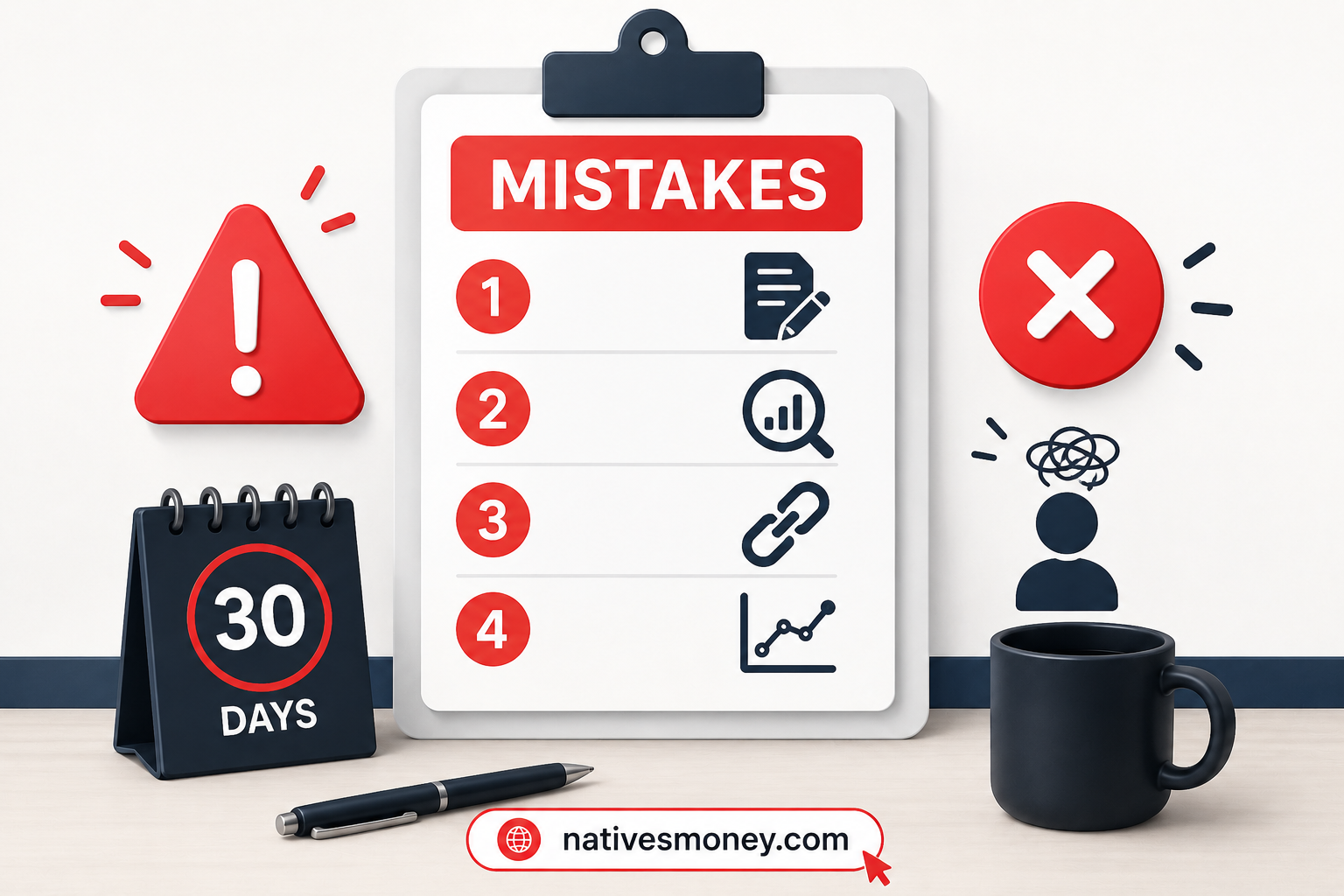
Mistake #1: Publishing AI-drafted content with too light an edit on a few early posts. In my rush to hit the daily publishing target, two early articles went out with noticeably generic phrasing I should have caught. I went back in week three and rewrote both more thoroughly , a good reminder that speed shouldn’t fully replace quality control.
Mistake #2: Choosing topics based on personal interest rather than pure search data for a few posts. Three articles in my content map were topics I personally found interesting but that had minimal search volume. They’re sitting with almost no traffic now, a clear lesson that AI content creation tools are only as good as the strategy guiding them.
Mistake #3: Underestimating internal linking. I was so focused on publishing volume that I didn’t properly link related articles to each other until week four, which likely cost me some early SEO momentum. Internal linking should be built in from the first article, not retrofitted later.
Mistake #4: Not setting up analytics until day four. I lost three days of baseline traffic data because I delayed connecting Google Analytics and Search Console. Set these up before you publish anything, even article one.
What to Realistically Expect After 30 Days
Let me be completely honest about where things stood at the end of the sprint, because hype doesn’t help anyone plan realistically. By day 30, my blog had almost no organic traffic yet , maybe 15-20 daily visitors, mostly from social shares and a handful of early-indexing pages. This is completely normal; Google takes months to fully trust and rank new content, regardless of how it was produced.
The real value of the 30-day sprint wasn’t immediate income , it was having a complete content foundation in place before the typical six-month SEO ramp-up period even started. By month four, traffic had grown to roughly 800 monthly visitors, and by month six, the blog was earning $150-300/month from a combination of affiliate links and early display ad revenue.
This timeline matches what most people researching how can I make money blogging should genuinely expect , the content creation can be compressed using AI tools, but Google’s trust-building timeline for new sites cannot be rushed, no matter how fast you publish.
On the US tax side, once this blog starts generating any income, it counts as self-employment earnings. Keep records of hosting costs, tool subscriptions, and any other blog-related expenses from day one, since these are deductible business expenses that reduce your taxable income. Using AI Content Creation Tools can also help streamline your blogging workflow, but remember to track any paid AI subscriptions as part of your business-related expenses.
Best AI Content Creation Tools and Resources to Replicate This

If you want to run your own version of this sprint, here’s the stack I’d recommend:
ChatGPT and Claude (both free tiers available) are the core engines for outlining and drafting , I used both interchangeably depending on which produced a stronger first draft for a given topic.
Rank Math (free WordPress plugin) handles on-page SEO scoring, schema markup, and basic technical optimization without needing a separate paid SEO tool during this early stage.
Grammarly (free plan available) catches grammar and readability issues during the final editing pass, which matters more once you’re publishing at higher volume and risk missing small errors.
For more on building income-generating content businesses using AI from the ground up, the Startups section at Natives Money has more honest breakdowns worth bookmarking.
The Bottom Line
AI content creation tools didn’t replace the strategic thinking, editing, and judgment that a real content business still requires , but they compressed a content creation timeline that used to take months into a focused 30-day sprint. If you’ve been stuck wondering how can I start a blog without burning out before you’ve built any real momentum, this kind of structured, AI-assisted approach is genuinely achievable.
The income won’t be immediate, and anyone promising overnight results with AI content creation tools is overselling the reality. But having a complete, well-structured blog foundation in 30 days instead of six months puts you that much further ahead when the organic traffic does start to build. For more honest, experience-based strategies, keep exploring nativesmoney.com.
Frequently Asked Questions
What are the best AI content creation tools for building a blog quickly?
The best ai writing tools for building a blog quickly include ChatGPT and Claude for outlining and drafting, paired with Rank Math for SEO optimization and Grammarly for final editing. Combining these AI content creation tools into a repeatable daily workflow is what makes a 30-day content sprint realistic.
How can I start a blog using AI tools without prior writing experience?
You can start a blog using AI content creation tools even without strong writing experience, since tools like ChatGPT and Claude generate first drafts you can refine rather than starting from a blank page. Focus on choosing a specific niche with real search demand, then let AI handle outlines while you add personal insight and editing.
How to make money from blogger blogs built primarily with AI content?
How to make money from blogger blogs built with AI assistance follows the same monetization paths as any blog , affiliate marketing, display ads, and digital products. The key is ensuring AI-drafted content is thoroughly edited and genuinely useful, since search engines and readers both reward quality over raw publishing volume.
How can I make money blogging faster using AI content creation tools?
How can I make money blogging faster largely depends on building your content foundation quickly using AI content creation tools, then patiently waiting through Google’s natural trust-building period for new sites. While AI can compress writing time from months to weeks, the search ranking timeline itself typically still takes four to six months regardless of publishing speed.
Is a 30-day blog built with AI content creation tools sustainable long-term?
Yes, as long as the initial sprint is followed by consistent ongoing publishing and genuine editing quality control. AI content creation tools work best as an accelerant for the early foundation-building phase, but long-term blog success still requires regular updates, fresh content, and continued investment in SEO and audience building.